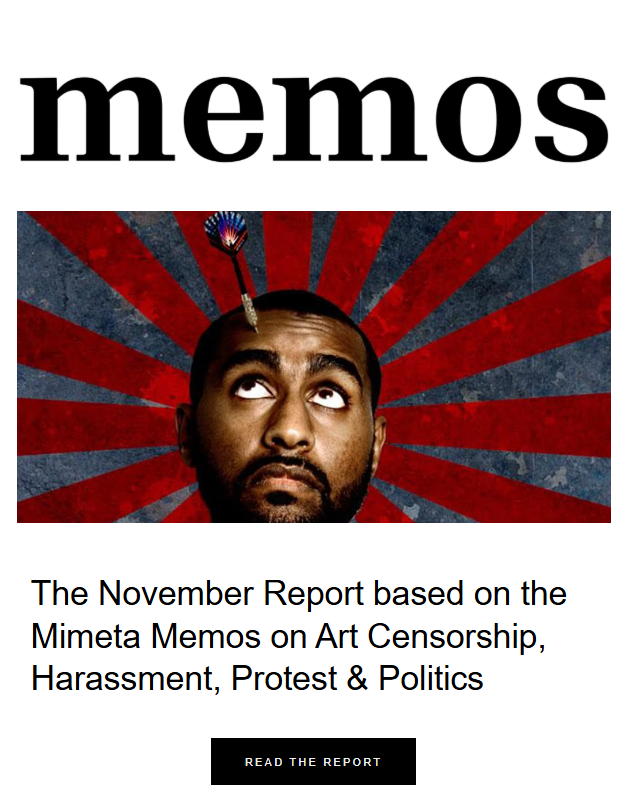
This article analyses patterns of artistic censorship documented by Mimeta in December 2025, focusing on 22 cases primarily from the MENA region. It maps how state security, religious authority, legal systems, informal pressure, and institutional governance converge to suppress cultural expression. The findings show morality and national security as dominant justifications, the rise of unwritten bans and procedural obstruction, and a troubling spread of similar mechanisms into democratic contexts.