Mimeta's January 2026 analysis reveals an unprecedented crisis in artistic freedom: 21 artists killed in Iran's month-long crackdown, TikTok's ownership transfer enabling infrastructure-level censorship affecting 170M+ users, and 44 documented cases across 27 countries. The Middle East accounts for 43% of cases, with religious justifications in 36%. Despite this escalation, resistance persists, Kenya overturned film bans, Lebanese artists performed under threats, and Australian boycotts sparked institutional crisis.
Mimeta Memos covered 44 cases of artistic censorship across 27 countries and territories, with 13 cases occurring specifically in January 2026. The month is defined by lethal escalation in Iran (at least 21 artists killed), structural platform censorship in the United States (TikTok ownership transfer), and a complex regional pattern centered in the Middle East (43% of cases) with significant pressure on artists in Lebanon, Syria, and Iraq.
This article analyses patterns of artistic censorship documented by Mimeta in December 2025, focusing on 22 cases primarily from the MENA region. It maps how state security, religious authority, legal systems, informal pressure, and institutional governance converge to suppress cultural expression. The findings show morality and national security as dominant justifications, the rise of unwritten bans and procedural obstruction, and a troubling spread of similar mechanisms into democratic contexts.
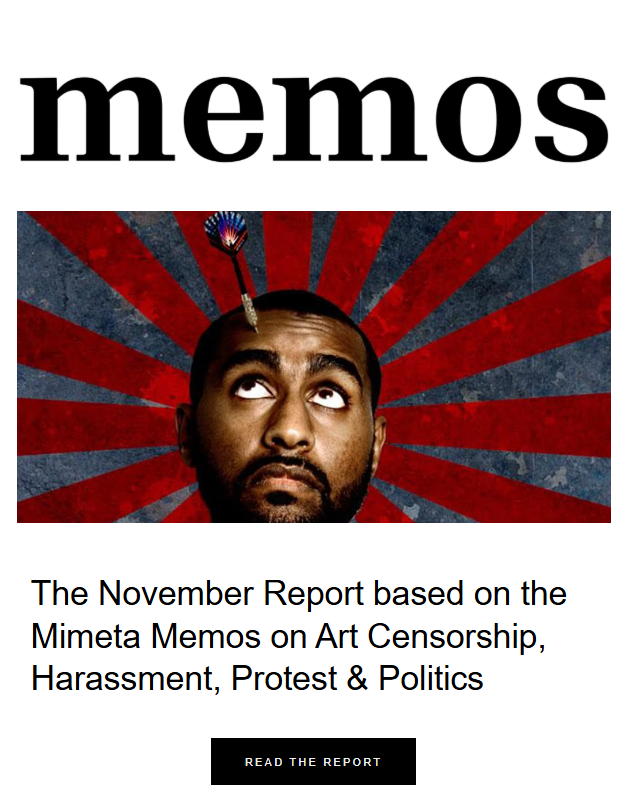
Based on the 18 cases published as Mimeta Memos in November 2025, this analysis identifies key patterns in how artistic freedom is being suppressed globally, who is responsible, what triggers these incidents, and what forms censorship takes.
The 2030 Sustainable Development Goals (SDGs) are crucial to Mimeta’s vision and approach to the idea of cultural development and artistic freedom. They are precisely emphasising how Mimeta can promote democratisation and the implementation of human rights. The SDGs also influence the structures of monitoring and evaluating within programmes of Mimeta.
One of the strategic discourses given much attention by our partners relates to this significant role of the arts and storytellers, in shaping our understanding of the world around us. In contemporary terminology this understanding is defined as the narratives we relate to. For our partners the possible shaping of changes in these narratives is a primary motivation for their work, according to a survey Mimeta did among partners in 2022.
Ettijahat actively uses gender as a lens in their operations and consults with a gender expert in the design of their activities. This was noted in its work. Artists working with unconventional art forms are encouraged to apply, as are refugees and members of the LGBTQIA+ community, and especially women in these groups
Many of the initiatives of Mimeta’s partners have the opportunity to engage the public in questions of climate justice and environmental consciousness
The long-term impact coming from the program is to provide free artistic practice to individuals. To achieve this intended impact, the program focuses on outcomes that ensure protection for artists, storytellers, producers, and their works against abuse, censorship, legal or social persecution, and outcomes that increase accessibility for people to participate in artistic practice. These two outcomes constitute the universal artistic rights (ref. art 27).