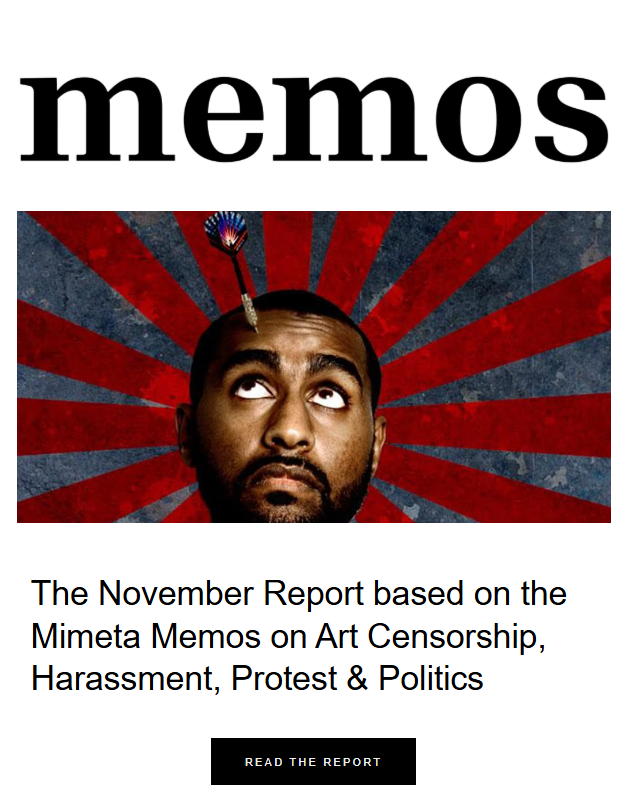
News from Civsy, based on generative AI tools and retrieval-augumented real time data searchThe quiet cancellation of Jumana Manna’s planned solo exhibition at Heidelberger Kunstverein in October 2023 has become a frequently cited case in ongoing European debates about artistic freedom, Palestine, and the expanding reach of antisemitism policy in the cultural field. Announced only a month before opening, the decision came in the wake of media and political criticism portraying the Berlin‑based Palestinian artist as sympathetic to terrorism, and was later followed by the non‑renewal of her guest professorship at the Academy of Fine Arts Munich after accusations framed in terms of antisemitism.
From cancellation to pattern
The Heidelberg exhibition had been developed over an extended period, with new work commissioned specifically for the institution, yet it was quietly withdrawn, leaving the artist without the anticipated platform and context for the work. Documentation initiatives such as Archive of Silence now list the case as an example of “defamation‑driven” silencing, situating the cancellation within a wider German pattern in which Palestinian and pro‑Palestinian cultural workers report that invitations, exhibitions, and teaching roles are revoked once their political positions become publicly contested.
Around the same time, German and international commentary began to link Manna’s situation to a broader wave of cancellations after 7 October 2023, including postponed or cancelled talks, rescinded tours, and withdrawn museum programmes involving artists and academics who had criticised Israeli policies or used terms such as apartheid, colonialism, or genocide. In subsequent interviews and essays, Manna herself describes a cascading effect: she notes that the Heidelberg and Munich decisions were followed by further cancellations “in Germany, where I live, and elsewhere”, and argues that her experience is one instance among many in which institutions move to limit Palestinian participation when controversy arises.
Antisemitism frameworks and institutional practice
For Manna, these episodes are closely tied to the ways antisemitism frameworks are being integrated into cultural governance, particularly the “working definition” of the International Holocaust Remembrance Alliance (IHRA). She maintains that, in Germany, IHRA has increasingly been used not only as a descriptive guideline but as a de facto instrument shaping funding criteria, programming decisions, and contractual expectations, thereby making artists’ publicly expressed views on Israel and Palestine part of institutional risk assessment.
Central to her critique is the claim that elements of the IHRA framework risk blurring the line between antisemitism, hostility toward Jews as Jews, and political critique of the State of Israel or Zionism. In this reading, support for campaigns such as BDS, opposition to Israeli occupation, or the use of terms like genocide in relation to Gaza can become grounds for professional scrutiny or sanction. From this perspective, the Heidelberg and Munich decisions are not simply isolated judgements about an individual artist’s conduct, but part of a wider environment in which allegations of antisemitism, often sparked by social‑media posts or petitions, can be sufficient to justify excluding Palestinian voices from public programmes.
Strike Germany and the call for another standard
Manna situates her own case within a collective response, most notably through her support for the Strike Germany initiative. Strike Germany calls on artists, writers, and scholars to reconsider participation in German cultural institutions that require adherence to IHRA or otherwise introduce contractual clauses perceived as policing pro‑Palestinian speech, while also providing a “toolbox” for negotiating with institutions that are willing to review such policies.
A central proposal in this toolbox is to replace IHRA with the Jerusalem Declaration on Antisemitism (JDA) as a reference point.
Drafted by a group of scholars, the JDA explicitly distinguishes between antisemitic hate and opposition to Zionism or Israeli state policies, while still defining and condemning antisemitism.
Manna presents this shift as crucial if cultural spaces are to both protect Jewish communities against real antisemitism and avoid criminalising or marginalising Palestinian narratives and solidarity campaigns; in her view, the Heidelberg case illustrates how practices informed by IHRA can, in some instances, undermine institutional commitments to diversity and free expression.
Self‑policing, memory politics and artistic freedom
In her broader reflections on the German art field, Manna speaks of an emerging climate of “self‑policing”, in which institutions increasingly review artists’ signatures, public statements, and social‑media activity in anticipation of possible backlash. Archive of Silence and related mapping projects document multiple cases in which events involving Palestinian, Arab and critical Jewish speakers are cancelled or altered, children’s exhibitions from Gaza are withdrawn, or funding is reportedly threatened if organisations do not distance themselves from events labelled as antisemitic.
Commentators and scholars also connect these developments to Germany’s post‑war memory politics, arguing that official commitments to combating antisemitism can, in practice, coincide with strong political expectations of solidarity with Israel, while far‑right antisemitism and racism against other minorities may remain insufficiently addressed. From this vantage point, the Heidelberg cancellation appears not only as a local institutional choice, but as part of a broader European tendency in which antisemitism frameworks, alongside other security and reputational concerns, may be used in ways that limit contentious debate on colonial violence and narrow the space for Palestinian artists like Manna in the public sphere
Controversy in Norway
A recent controversy in Norway has extended these debates beyond the German context. In 2022, Manna was selected through a national competition to create the large stone floor artwork for the new government quarter in Oslo, a site closely tied to the memory of the 22 July 2011 terror attack.
In late 2025, Norwegian activists and media began questioning this commission by highlighting an Instagram story she posted on 7 October 2023 in which she appeared to describe the Hamas attacks on Israel in celebratory or appreciative terms; critics interpret the post as support for terrorism and argue that such a figure should not hold a state‑linked commission in a memorial space. The ensuing debate has centred on whether an artist with these public statements can legitimately represent the Norwegian state in such a symbolically charged location, and has raised broader concerns about artistic freedom, the use of antisemitism and “support for terror” as criteria in evaluating artists, and the risk that institutions will engage in pre‑emptive self‑censorship by screening the political views of artists before commissioning public work.
Emphasis on professional process and jury
KORO, the commisioner, has so far defended the choice of Jumana Manna mainly by standing firmly on the original artistic and procedural grounds for the commission, rather than entering the political controversy around her posts.koro KORO underlines that the Quarter floor was awarded after an invited competition in which ten artists were asked to submit proposals, and an expert jury selected Manna’s project as the winner. In its public material, KORO stresses the quality of her proposal, its anchoring in Norwegian art history and in her earlier work with the former Government Quarter, and her education from the Academy of Fine Art in Oslo, signalling that the choice is based on established professional criteria.
Focus on the artwork and its concept
In project descriptions and press material, KORO consistently talks about the artwork itself: an approximately 800 m² floor made of reclaimed stone from across Norway, involving municipalities, public infrastructure and historical structures. The framing highlights themes such as sustainability, circular economy and collective memory, positioning the work as an inclusive, long‑term contribution to the symbolic core of the new Government Quarter, rather than as a vehicle for the artist’s political statements about Israel–Palestine.
Silence on political vetting and security claims
When critics have questioned how Manna “passed through the eye of the needle” of NSM, Statsbygg and KORO, pointing to her 7 October post, KORO has not publicly signalled any change of course in its own project pages or press texts. The agency’s communication continues to present the commission as settled and progressing according to plan, and it has not published any new criteria suggesting that artists’ political views on Israel/Palestine will be retroactively used as a basis for revising already awarded commissions.
Manna has combined a specific explanation of her 7 October post with a broader political defence of her work and speech.
Explanation of the 7 October posts
She has stated that the Instagram story in question were posted very early on 7 October, when she had heard only that Hamas militants had breached the barrier around Gaza, and before she understood that a large‑scale massacre of civilians was taking place. In later comments she says that the “creativity of resistance” framing was meant as a reaction to Palestinians breaking out of what she sees as an open‑air prison, not an endorsement of killing civilians, and that she removed the stories once the full extent of the attacks became clear.jta
Reframing the accusations
Manna argues that the way her post have been used since then illustrates a wider pattern in which Palestinian expressions of joy or relief at breaches in the blockade are retroactively read as support for terrorism. She maintains that accusations of “glorifying terror” or antisemitism function less as a careful assessment of her intent than as a tool to discredit Palestinian artists who speak openly about occupation, apartheid and Gaza.thirdtext
Defence of her political speech
In interviews she insists on a clear distinction between antisemitism and criticism of Israel or Zionism, and rejects the idea that her positions, including support for boycott campaigns and the description of Israeli policies as apartheid and genocidal, should be treated as racist. She places her own case alongside those of other Palestinian and anti‑Zionist Jewish artists and academics in Germany, arguing that they are being targeted not for hatred of Jews but for opposing what they see as colonial violence and genocide in Gaza. artdogistanbul
https://www.moussemagazine.it/magazine/jumana-manna-kerstin-stakemeier-heidelberger-kunstverein-2024
https://cimam.org/museum-watch/museum-watch-actions/cancellation-and-censorship-in-times-of-war/
https://hyperallergic.com/documenta-adopts-widely-criticized-definition-of-antisemitism/
https://artasiapacific.com/news/artists-in-germany-campaign-against-mandatory-antisemitism-clause
https://prtcls.com/article/berlin-art-and-palestine-conversation/
https://kunstkritikk.no/jumana-manna-med-verk-til-regjeringskvartalet
https://koro.no/prosjekter/bygulvet-i-nytt-regjeringskvartal/
https://www.c4israel.org/jns-org/norway-pm-grilled-on-state-employed-artists-oct-7-praise/
The cancellation of Jumana Manna’s planned 2023 exhibition in Heidelberg has given vital European conversation on artistic freedom, institutional self‑policing, and the use of antisemitism frameworks like IHRA in cultural governance.
Manna’s experience highlights the tension between protecting communities from hate and preserving space for political critique and Palestinian narratives. Initiatives like Strike Germany and proposals to adopt the Jerusalem Declaration on Antisemitism offer pathways for more balanced cultural policies.
#ArtFreedom #PalestinianVoices #CulturalPolicy #Antisemitism #IHRA #JerusalemDeclaration #ArtDebate #InstitutionalCritique #StrikeGermany #JumanaManna