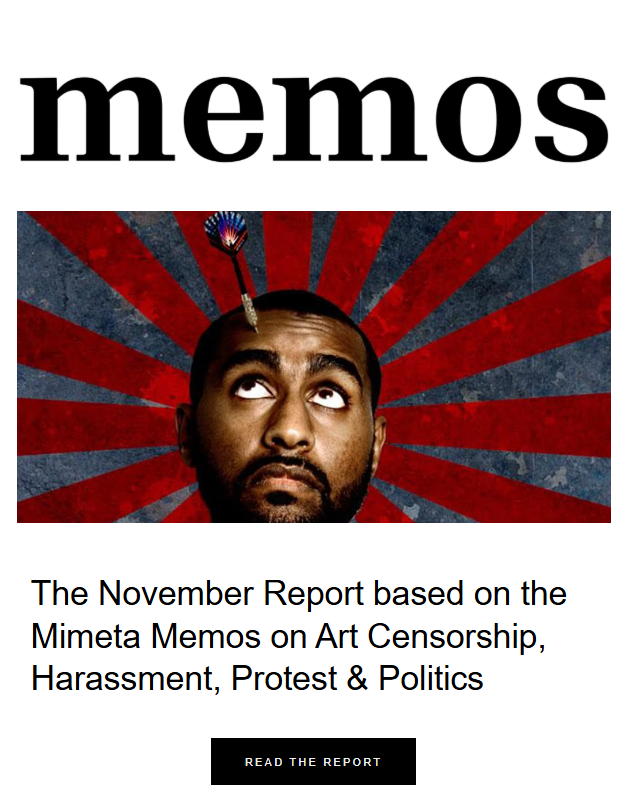
News from Civsy, based on human monitoring, generative AI tools and retrieval-augumented real time data searchSouth Africa’s cancellation of Gabrielle Goliath’s Venice Biennale pavilion has become a focal point of a broader crisis in arts governance, raising questions about political interference, constitutional guarantees of expression, and the country’s cultural reputation. The episode centres on Minister Gayton McKenzie’s unilateral termination of an independently selected national commission, in a system that is formally committed to an arm’s‑length principle between government and artistic decision‑making.
Background: The Goliath Venice case
Gabrielle Goliath, working with curator Ingrid Masondo, was unanimously chosen on 6 December 2025 by a five‑person independent selection committee to represent South Africa at the 2026 Venice Biennale with a project from her ongoing “Elegy” series. The work includes a suite responding to the killing of Palestinian children in Gaza, extending a long‑running practice of mourning and black feminist remembrance that has previously addressed sexual violence and femicide.
On 22 December 2025, Minister McKenzie wrote to the pavilion organisers describing the Gaza‑related component as “highly divisive” and linked to an “ongoing international conflict that is widely polarising,” indicating that he might withdraw the pavilion unless changes were made. On 2 January 2026, eight days before Biennale submission deadlines, the Department of Sport, Arts and Culture (DSAC) terminated South Africa’s pavilion and effectively cancelled Goliath’s participation.
Political interference and arm’s‑length principle
The South African arts policy framework has, since the 1990s, formally endorsed an arm’s‑length model in which peer bodies, rather than politicians, evaluate and decide on support for artistic projects. The 1996 White Paper on Arts and Culture states that the state should facilitate mechanisms for peer evaluation and decision‑making regarding arts funding, explicitly naming an “arm’s length” approach to protect independence and participation. Legal and policy scholarship on arts governance in South Africa similarly argues that the state should adopt “hands‑off” and arm’s‑length practices in commissioning public art, with only clearly defined and narrow limits to artistic expression.
McKenzie’s intervention directly overrode a binding decision by an independent curatorial panel and was publicly described by that committee as an “abuse of executive authority” and a form of censorship. In court papers lodged in the Gauteng High Court, Goliath and Masondo argue that the minister’s cancellation is “manifestly unlawful,” violates section 16 of the Bill of Rights, and constitutes “a blatant and egregious example of censorship and silencing of dissent.”
Constitutional, legal and sector implications
South Africa’s Constitution protects freedom of expression, with section 16 understood in jurisprudence and commentary to include artistic creativity, subject only to narrow exceptions such as incitement to imminent violence or advocacy of hatred. In this case, there is no allegation that Goliath’s work meets those thresholds; rather, the minister characterises it as reputationally risky and geopolitically “divisive,” invoking concerns about foreign influence (specifically Qatar Museums) that have been substantially challenged in investigative reporting. This moves the justification squarely into the terrain of viewpoint‑based discrimination, where a state actor disfavours a work because of its political or moral message.
The dispute has escalated into litigation, with Goliath seeking to have McKenzie’s decision reviewed and set aside as unconstitutional, and to compel DSAC to honour the original selection. Civil society institutions such as the Centre for Humanities Research and prominent cultural figures have issued statements condemning the cancellation and calling on the executive, including the president, to intervene to restore the pavilion and reaffirm the arm’s‑length principle.
Crisis of credibility and cultural standing
International art and news outlets now frame the controversy as evidence of a deepening crisis in South Africa’s arts and culture governance. Reports highlight that the decision has damaged trust in government processes, undermined the integrity of peer‑reviewed selection mechanisms, and contradicted the country’s stated commitments to artistic freedom and solidarity with oppressed populations. The fallout has extended into the commercial art world: Johannesburg’s Goodman Gallery, long associated with Goliath, ended its relationship with the artist shortly after her selection, adding to perceptions of sectoral instability and chilling effects.
The absence, to date, of a clear, rights‑based public response from the presidency or from DSAC has further deepened uncertainty, with open letters and public campaigns appealing directly to the head of state to uphold constitutional protections and restore confidence in South Africa’s cultural diplomacy. The case is now widely read as a test of whether South Africa will maintain a genuinely arm’s‑length cultural policy or normalise politically driven interference in artistic content, especially where work touches on sensitive global conflicts.
References:
Statement on Venice Biennale Decision, Department of Sport, Arts and Culture (DSAC), 9 January 2026.[dsac.gov]
“Minister Gayton McKenzie on Venice Biennale decision,” Government of South Africa media statement, 10 January 2026.[gov]
DSAC / Minister statement via official Facebook page.[facebook]
“South African artist Gabrielle Goliath to approach high court over cancelled Venice Biennale pavilion,” The Art Newspaper, 20 January 2026.[theartnewspaper]
“South Africa’s Venice Biennale artist appeals to president after pavilion cancelled by new arts minister,” The Art Newspaper, 13 January 2026.[theartnewspaper]
“South Africa Cancels Venice Biennale Gaza Artwork by Gabrielle Goliath,” ARTnews, 9 January 2026.[artnews]
“South Africa Cancels Venice Biennale Pavilion Over Gaza-Related Work,” ArtAsiaPacific, 19 January 2026.[artasiapacific]
“Gabrielle Goliath to Seek Legal Action After Axed Venice Biennale Pavilion,” Hyperallergic, 20 January 2026.[hyperallergic]
“South Africa’s Culture Minister Investigated After Venice Biennale Censorship Row,” Artnet News, 19 January 2026.[news.artnet]
“Venice Biennale Pavilion Dispute Heads to South African High Court,” Artnet News, 22 January 2026.[news.artnet]
“Gayton McKenzie pulls the plug on SA’s Venice Biennale submission because he doesn’t like its Gaza focus,” Daily Maverick, 8 January 2026.[dailymaverick.co]
“Artist Gabrielle Goliath sues Gayton McKenzie over cancellation of work for Venice Biennale,” Daily Maverick, 21 January 2026.[dailymaverick.co]
“Goodman Gallery drops artist Gabrielle Goliath after her Venice Biennale selection,” Daily Maverick / related coverage.[dailymaverick.co]
Centre for Humanities Research (CHR), “CHR statement on the cancellation of Gabrielle Goliath’s Elegy from the South African pavilion at the Venice Biennale,” 18 January 2026.[chrflagship.uwc.ac]
“WHEN ART IS SILENCED: An OPEN LETTER to President Cyril Ramaphosa,” ArtAfrica, 22 January 2026.[artafricamagazine]
“South Africa Biennale Censorship: Goliath Pavilion Pulled,” Africa Art News.[africaartnews]
“Goodman Gallery Drops Gabrielle Goliath Following her Venice Biennale Selection,” Africa Art News.[africaartnews]
Arts and Culture White Paper, South African Government, 1996.[gov]
Pete & Pudifin, “A critical look at the legal framework for arts, culture and heritage” (and related scholarship on arm’s-length principles and limits to artistic expression in public art).journals+1