News from Civsy, based on human monitoring, generative AI tools and retrieval-augumented real time data search
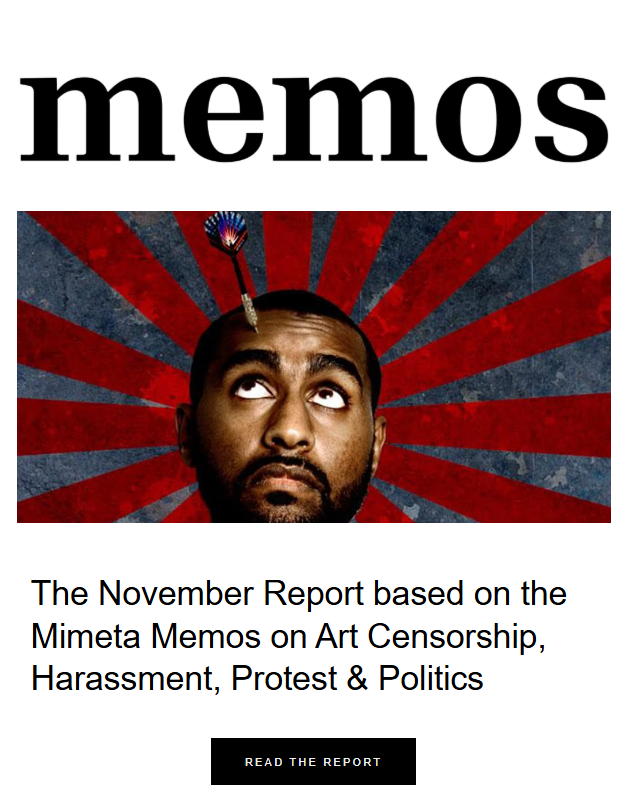
Photography of Lucien Bourjeily, Lebanese writer and director, Date14 July 2015, https://commons.wikimedia.org/wiki/File:Lucien_Bourjeily.jpg
Lebanon's General Security Censorship Bureau delayed the theatrical release of the Lebanese anthology film "Disorder" in July 2025, conditioning its screening license on the removal of a 20-second scene depicting security force violence against protesters during the October 2019 uprising. Director Lucien Bourjeily complied under coercion to avoid a complete ban, but the censorship incident underscores the continued suppression of artistic documentation of state violence in Lebanon.
The Film and International Recognition
"Disorder" is an anthology film curated and produced by Bechara Mouzannar under the production banner Unbranded, with executive producers Nadine Labaki and Khaled Mouzanar. The film comprises four segments directed by Lucien Bourjeily ("The Group"), Bane Fakih ("Motherland"), Wissam Charaf ("Don't Panic"), and Areej Mahmoud ("A Piece of Heaven"). Its synopsis describes the work as a "multi-layered portrait of the turbulent and pivotal years that Lebanon has been living, since the big collapse of October 2019 and the Beirut Port explosion on August 4, 2020, through four stories mixing drama and dark comedy."
Before its Lebanese theatrical release, the complete version of "Disorder" screened at multiple international festivals and venues, including the Arab World Institute in Paris, the International Arab Film Festival Zurich, the Washington DC International Cinema Festival, and the South Screens Festival at Metropolis Cinema in Beirut. At Egypt's El Gouna Film Festival in October 2024, the film won the Cinema for Humanity Audience Award.
Censorship and Delayed Release
The Lebanese theatrical release of "Disorder" was publicly scheduled for July 3, 2025, but General Security's Censorship Bureau withheld the screening license, delaying the opening to July 10, 2025. According to director Lucien Bourjeily, General Security verbally demanded, rather than issuing a written order, the removal of a scene from his segment "The Group" as a condition for approval. The scene showed young activists reviewing authentic documentary footage on their phones of security forces violently beating a fellow protester during the October 2019 demonstrations. The video was real footage filmed and circulated during the protests, capturing violence for which no officials have been held accountable.
Facing the binary choice between cutting the scene or seeing the entire film banned, Bourjeily and the distributor agreed to remove the approximately 20-second sequence. The censorship caused the film to lose one week of its planned two-week theatrical run and destroyed the artistic integrity of Bourjeily's segment, which was structured as a 22-minute continuous take designed to create "an effect of being trapped" through the looping imagery of protest violence.
Bourjeily's Response and Broader Context
Following the censorship, Bourjeily denounced the practice in Lebanese media, stating,
"This is a true story, not fiction. Lebanese people have been killed or seriously injured in peaceful demonstrations, some have lost their eyesight, and the perpetrators have never been held accountable. And it is us, the artists, who are punished for having documented these acts of violence."
He called for fundamental reform of Lebanon's censorship legal framework, questioning why security agents are authorized to judge artistic works and why prior censorship continues to exist.
The Alliance for Freedom of Expression condemned the censorship as "arbitrary interference that stifles creativity and fosters self-censorship." Culture Minister Ghassan Salameh expressed support for freedom of expression but acknowledged that current legislation grants General Security the right of censorship, which operates under the Interior Ministry rather than the Culture Ministry. The censorship power rests on a 1947 law with vague standards that allow bans for works deemed to undermine "public order, decency, public sentiment, the dignity of public authorities, or the national interest."
Part of a broader pattern of censorship
This incident is part of a broader pattern of censorship targeting Bourjeily, a Lebanese director, writer, and political activist whose work centers on corruption, censorship, and protest. His 2013 play "Will It Pass or Not?" which satirized Lebanon's censorship apparatus, was banned by General Security. In 2014, his passport was confiscated when he attempted to travel to London for a theatre festival, and he was nominated for the Index on Censorship Freedom of Expression Award for his resistance to artistic censorship. In 2015, he was beaten by security forces during a protest sit-in at the Environment Ministry. His previous film "Heaven Without People" (2017) was also subjected to cuts before Lebanese release.
The censorship of "Disorder" reflects the ongoing suppression of artistic works that document the extensive and well-documented security force violence during Lebanon's October 2019 uprising. Human rights organizations including Amnesty International and Human Rights Watch documented systematic excessive force by Lebanese security agencies during the protests, which were characterized as overwhelmingly peaceful, including beatings, excessive tear gas, rubber bullets, arbitrary arrests, and torture in detention.
Lebanon's General Security Censorship Bureau withheld a screening license for the anthology film "Disorder"
in July 2025, demanding removal of a 20-second scene depicting security force violence during October 2019 protests. Director Lucien Bourjeily, facing the choice between censorship or complete ban, reluctantly complied. The scene featured authentic documentary footage of police brutality for which no officials have been held accountable.
This censorship reflects a broader pattern targeting Bourjeily, whose plays and films have been repeatedly banned or censored. His 2013 play "Will It Pass or Not?" was banned, his passport confiscated in 2014, and he was beaten by security forces during a 2015 protest. Yet he continues creating politically engaged art challenging corruption and state violence.
Lebanon's 1947 censorship law grants General Security broad authority to suppress works deemed threatening to "public order, decency, public sentiment, the dignity of public authorities, or the national interest." This vague framework enables extrajudicial verbal censorship orders that prevent legal challenge. Human rights organizations documented systematic security force violence during October 2019, yet artists documenting this reality face suppression, not perpetrators.
#ArtisticFreedom #Censorship #Lebanon #HumanRights #FilmCensorship #FreedomOfExpression #StateViolence #LebanonCensorship #ProtestCensorship #CulturalFreedom
References
L'Orient-Le Jour (2025, July 20). "Twenty-second scene leads to censorship of Bourjeily's 'Mshalab'." Available at: https://today.lorientlejour.com/article/1470230/twenty-second-scene-leads-to-censorship-of-bourjeilys-mshalab.html
Beirut.com (2025, July 14). "Lebanese Film Celebrated Abroad But Censored in Lebanon, What Happened." Available at: https://www.beirut.com/en/757767/lebanese-film-celebrated-abroad-but-censored-in-lebanon-what-happened/
Screen Daily (2024, October 3). "Anthology 'Disorder' about life in Lebanon acquired by Front Row ahead of El Gouna." Available at: https://www.screendaily.com/news/anthology-disorder-about-life-in-lebanon-acquired-by-front-row-ahead-of-el-gouna/5197834.article
El Gouna Film Festival (2024, October 31). "Award Winners." Available at: https://elgounafilmfestival.com/award-winners/
International Arab Film Festival Zurich (2025). "Disorder." Available at: https://www.iaffz.com/en/program/movie/disorder.html
Carnegie Endowment for International Peace (2024, September). "Sleeping With the Enemy." Available at: https://carnegieendowment.org/middle-east/diwan/2024/09/sleeping-with-the-enemy?lang=en
Index on Censorship (2014, February). "Will it pass or not, play by Lucien Bourjeily." Available at: https://www.indexoncensorship.org/2014/02/going-dark-play-lucien-bourjeily/
Index on Censorship (2014, May). "Lebanon: General security return passport to critical writer." Available at: https://www.indexoncensorship.org/2014/05/lebanon-general-security/
Amnesty International (2023, March 14). "Lebanon: No accountability for security forces' crackdown on protesters since 2019." Available at: https://www.amnesty.org/en/latest/news/2023/03/lebanon-no-accountability-for-security-forces-crackdown-on-protesters-since-2019/
Human Rights Watch (2019, October 19). "Lebanon: Security Forces Use Excessive Force Against Protesters." Available at: https://www.hrw.org/news/2019/10/19/lebanon-security-forces-use-excessive-force-against-protesters
Amnesty International (2019, October 18). "Lebanon: Authorities must immediately end the use of excessive force against peaceful protests." Available at: https://reliefweb.int/report/lebanon/lebanon-authorities-must-immediately-end-use-excessive-force-against-peaceful
SKeyes Center for Media and Cultural Freedom (2023, August 24). "Film Censorship in Lebanon: How Does it Work?" Available at: https://www.skeyesmedia.org/en/News/News/25-08-2023/10831