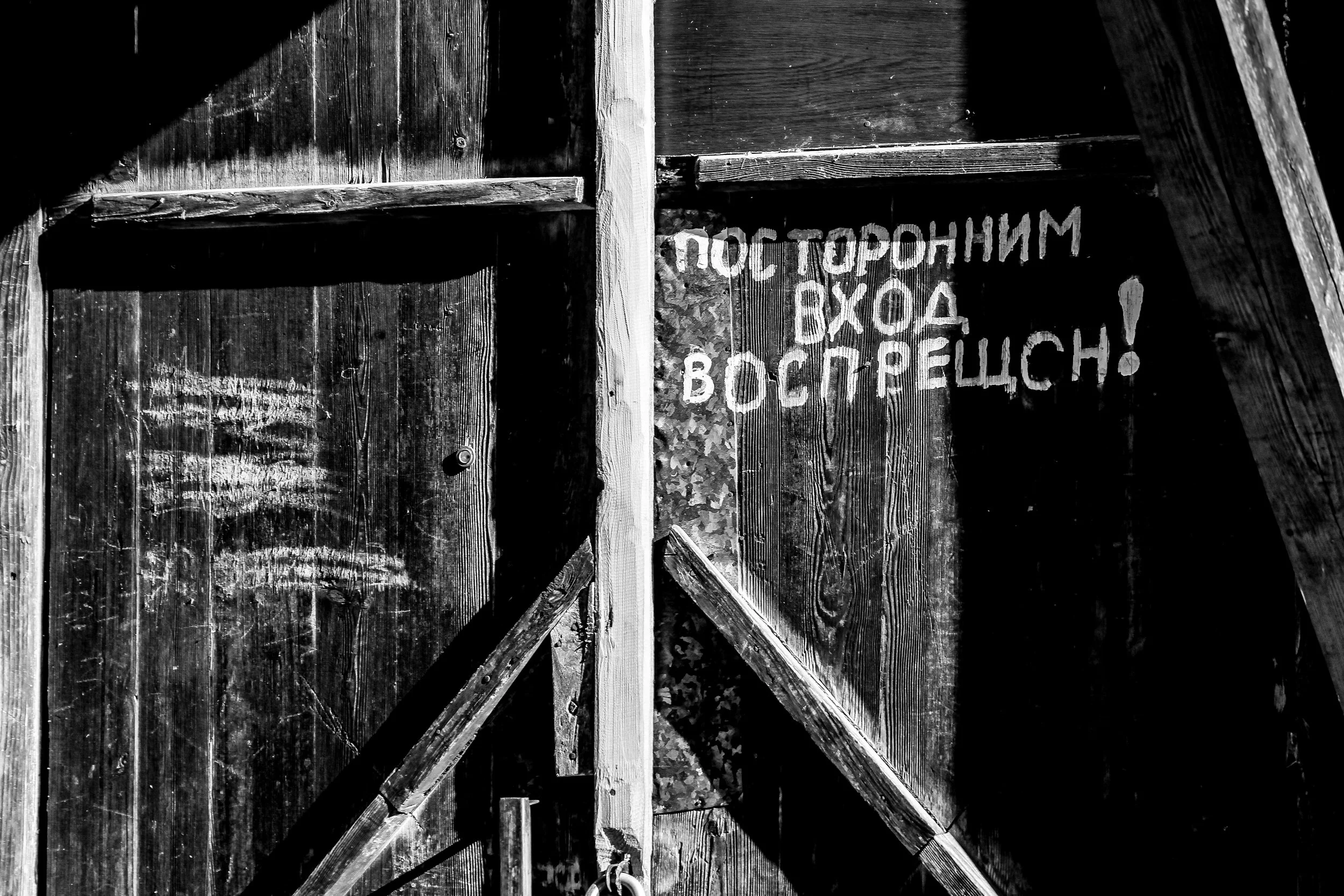
Photo by Dimitry Grachyov on Unsplash
Feature from Civsy, based on generative AI tools and retrieval-augumented real time data search
Introduction
Russia's systematic campaign to control artistic expression has intensified dramatically between 2022 and 2026, transforming the nation's publishing industry and cultural landscape through raids, prosecutions, institutional restructuring, and pervasive self-censorship. Literary critic Alex Mesropov characterized 2025 as "arguably the worst year yet" for Russia's publishing industry, citing escalating raids, prosecutions, and self-censorship in that sector.[1]
Two interconnected but distinct repression campaigns have converged: the targeting of established cultural figures through administrative pressure and institutional control, and the wholesale transformation of creative industries through raids, criminal prosecutions, and algorithmic enforcement mechanisms. The legal foundation for much of this repression stems from the November 30, 2023 Supreme Court ruling designating the nonexistent "international LGBT movement" as extremist. This ruling, which took effect in January 2024, has been applied to prosecute individuals for activities predating the designation.[2][3][4]
Cinema and Film
Sokurov's Rare Public Critique
According to Novaya Gazeta Europe (citing Russian independent outlet Agentstvo), filmmaker Alexander Sokurov criticized Russia's "foreign agents" law as "humiliating" during a December 2025 Presidential Council for Civil Society and Human Rights meeting attended via video link by Putin.[5] Sokurov, one of Russia's most internationally acclaimed directors, known for his 2002 masterwork Russian Ark and 2011 Venice Golden Lion winner Faust, used this forum to condemn the absence of transparent censorship procedures.[5][6]
Speaking before Putin, Sokurov noted that his 2022 film Fairytale, depicting Stalin, Churchill, Mussolini, and Hitler conversing in purgatory, was refused distribution in Russia.[5][7] By late 2023, Sokurov stated the film faced an official ban, though he received no formal explanation beyond a vague regulatory citation.[5][8] This contrasts with Soviet-era censorship, which at least provided filmmakers with explicit rationales for bans, Sokurov observed.[5]
Putin's response deflected substantive critique, reiterating standard defenses of the foreign agents law as necessary to combat foreign interference and claiming it was "little more than a direct copy of an equivalent US law."[5] However, Putin did pledge to investigate who banned Fairytale, implicitly acknowledging the opacity of censorship mechanisms.
The timing coincided with Putin's removal of Roman Romanov from the council just days before the meeting.[5][9] Romanov had served as director of Moscow's Gulag History Museum since 2012 but was dismissed in January 2025 after refusing demands to revise exhibition texts on Stalinist terror to "align with the times."[9][10] The museum had been closed in November 2024, officially citing "fire safety violations."[10][11]
Director Prosecutions and Industry Control
Director Kirill Serebrennikov's case exemplifies systematic erasure of dissenting voices. Beginning in 2017, Serebrennikov faced embezzlement charges related to the Platforma contemporary arts festival he organized between 2011 and 2014.[12][13] Prosecutors accused Serebrennikov of forming a "criminal group" to embezzle approximately 129 million rubles ($1.85 million) in state funds.[12][13] The case was widely viewed by observers as politically motivated retribution for Serebrennikov's challenging work, including a 2017 ballet about Rudolf Nureyev referencing the dancer's homosexuality.[12][14]
In June 2020, Serebrennikov received a three-year suspended sentence and was ordered to pay 800,000 rubles in fines plus 129 million rubles in damages, penalties that effectively bankrupted his organization.[12][13] Following Russia's 2022 invasion of Ukraine and Serebrennikov's criticism of the war, his name was removed from Bolshoi promotional materials and his productions were dropped from the repertoire.[15][16]
The Bolshoi's 2017 ballet Nureyev, choreographed by Serebrennikov, was permanently dropped from the repertoire in April 2023 following expansion of Russia's "LGBT propaganda" ban to all ages.[15][17] Bolshoi director Vladimir Urin explicitly cited "the newly signed law, which unequivocally addresses issues related to the propaganda of non-traditional values" as the reason.[15] In a January 2024 interview, Urin openly acknowledged censorship practices: "When certain creators of performances spoke unequivocally against the special military operation, their names were omitted from the posters."[16]
Literature and Publishing
The Publishers' Criminal Case
In May 2025, Russian security forces raided Eksmo, Russia's largest publishing house, controlling approximately 20% of the domestic market, and its subsidiaries Individuum and Popcorn Books.[1][18] At least ten publishing employees were detained, with at least three placed under house arrest on charges of "organizing the activities of an extremist organization", specifically, the fictitious "international LGBT public movement."[1][19]
The criminal charges under Article 282.2 of Russia's Criminal Code carry sentences of up to 12 years in prison.[1][2] Central to the case is Summer in a Pioneer Tie, a novel depicting a same-sex relationship between teenagers at a Soviet-era summer camp. The book became a surprise bestseller before attracting denunciations from State Duma deputies.[1][20] Other titles include mainstream international young adult literature like Alice Oseman's Heartstopper.[21]
Critically, many books were published between 2019 and 2022, before Russia's 2022 expanded "LGBT propaganda" ban, yet are being prosecuted retroactively under the November 2023 Supreme Court ruling.[1][2]
Industry-Wide Self-Censorship
Following the May arrests, Eksmo sent letters to bookstores demanding "disposal" of 50 titles, including André Aciman's Call Me by Your Name.[1][18] Trading House BMM followed with 37 titles requiring removal, including works by Jeffrey Eugenides and Slavoj Žižek.[1] In December 2025, LitRes, Russia's largest e-book retailer, pulled 4,500 titles from sale due to "uncertainty over how to label this content."[1]
Fines have reached draconian levels: publisher Ad Marginem received an 800,000 ruble ($9,860) fine for printing Olivia Laing's Everybody, while online library Mangalib faced 14 million rubles ($172,600) for manga allegedly containing "LGBT propaganda."[1][22]
Black bars obscuring text have become ubiquitous in Russian publishing, appearing in books from nearly every publisher.[1][23] New editions of works by Michael Cunningham, Salman Rushdie, and biographical studies of Simone de Beauvoir feature extensively redacted pages.[1]
Targeting Classic Science Fiction
In December 2025, Russian authorities conducted raids in multiple cities targeting Ursula K. Le Guin's 1969 science fiction classic The Left Hand of Darkness, a novel exploring gender and androgyny that was translated into Russian during the Soviet era.[1][24] Police raids on bookstores began in spring 2025, initially focusing on Moscow, St. Petersburg, and Novosibirsk.[1][25]
In April 2025, police seized dozens of books "bearing signs of LGBT ideology" from St. Petersburg's Podpisnye Izdaniya bookstore, one of the city's longest-running independent shops.[25] The bookstore's director was fined 800,000 rubles ($10,200) in May 2025 for featuring books by Susan Sontag and Olivia Laing.[22]
Medinsky and the New Cultural Vertical
The May 2025 transfer of book industry oversight from the Digital Development Ministry to the Culture Ministry consolidates ideological control.[1] Vladimir Medinsky, former Culture Minister (2012-2020), current presidential aide, and since February 2025 chairman of the Russian Writers' Union—architects this transformation.[1][26]
At an extraordinary congress on February 26, 2025, Medinsky was "elected" as Writers' Union chairman, standing as the sole candidate.[26] His appointment came with a sevenfold increase in the union's budget, giving him control over the Khudozhestvennaya Literatura publishing house and Soviet-era Writers' Union real estate.[1][26] His stated priorities frame literature as an instrument of state ideology: the union will "take part in forming a book market, pushing state interests and purging shops of 'low quality reading trash.'"[26]
In September 2025, reports emerged that Eksmo had begun using an AI program reportedly of Chinese origin to screen manuscripts for "legal violations," with the procedure mandatory "for every imprint and editorial office within the group."[1] Other Russian publishers are expected to adopt similar automated pre-publication censorship systems.[1]
Theatre and Stage Performance
Terrorism Charges for Anti-Terrorism Play
In July 2024, a military court in Moscow sentenced theatre director Yevgenia Berkovich and playwright Svetlana Petriychuk to six years in prison for "justifying terrorism" based on their award-winning play Finist, The Brave Falcon.[27][28] The production, which premiered in May 2020 and won several prestigious theatre awards including the Golden Mask Award, tells the story of Russian women lured online into joining ISIS, only to return disillusioned and face prosecution.[27][28][29]
Despite the play's explicitly anti-terrorism message, Berkovich stated in court, "I staged the play to prevent terrorism", prosecutors argued it promoted "extremely aggressive Islamic ideologies."[28][30] The trial was held largely behind closed doors after the judge granted prosecution requests to exclude the public.[28][30] Both women were detained in pre-trial custody beginning in May 2023, with requests for house arrest denied.[29][31]
In addition to prison sentences, authorities placed both women on the government's "terrorists and extremists" list, restricting bank account access to 10,000 rubles (approximately $94) per month.[29][32] This represents the first time Russian theatre professionals have been prosecuted under terrorism statutes for artistic work since the 2022 invasion of Ukraine.[28]
Regional Theatre Control
Following controversy over a modern production of Shakespeare's Othello, authorities in North Ossetia announced plans in December 2025 to create a "public council on cultural issues" to review theatrical works for compatibility with "Russian spiritual and moral values."[33] The production faced denunciations from vigilante groups including Zov naroda (People's Call), whose leaders demanded law enforcement investigations.[33]
Music and Sound Art
Teenage Musicians Jailed for Covers
In October 2025, Diana Loginova (age 18) and her band Stoptime were arrested in St. Petersburg and sentenced to 12-13 days in jail for performing covers of songs by blacklisted musicians Noize MC and Monetochka.[34][35] Authorities charged them with "organizing a concert that hindered pedestrian access to a subway," but the real offense was performing music from Russia's official "stop list" of banned artists.[34][35]
The stop list began with 22 artists in March 2022 when patriotic media holding Russian Media Group suspended cooperation with musicians who spoke against the war, and had grown to 79 names by 2024.[36] Western performers including Beyoncé and Metallica now appear on the list alongside Russian musicians.[36]
Foreign Agent Designations and Content Removal
Multiple Russian musicians have been designated "foreign agents," making continued work in Russia virtually impossible.[36] For musicians with this designation, entire albums are removed from streaming platforms. In 2024, at Roskomnadzor's request, streaming services removed Kasta's album Foreign Rap Releases, citing lyrics allegedly containing "false information aimed at destabilising the socio-political situation in the Russian Federation."[36]
Between January 2022 and March 2025, Yandex.Music removed over 14,000 items of content at government request, including songs, video clips, album covers, and podcasts.[36]
Concert Cancellation Campaigns
By March 2022, concert agencies began inserting clauses in contracts prohibiting political statements, leading to mass cancellations affecting artists including Noize MC, Valery Meladze, Mashina Vremeni, Bi-2, Nogu Svelo!, and Pornofilmy.[36] Enforcement involves venue managers being pressured by Federal Security Service (FSB) agents, local prosecutors' offices, municipal authorities, and Rospotrebnadzor through official warnings, threats of closure, or pretexts like bomb scares and sanitation violations.[37]
A 2018-2019 case involved electronic duo IC3PEAK and band Friendzone, whose concerts across multiple Russian cities were systematically canceled through coordinated official intervention.[37] In Kazan, authorities broke up an IC3PEAK performance at a third venue after two had already canceled; in Perm, three venues canceled and law enforcement kept the group under surveillance; in Novosibirsk, police detained IC3PEAK for three hours after arrival.[37]
Boris Grebenshchikov, founder of the band Aquarium and often called the godfather of Russian rock, has been designated a "foreign agent" and cannot perform in Russia despite decades as a cultural icon.[34]
Visual Arts and Museums
Museum Restructuring and Institutional Collapse
The dissolution of the State Tretyakov Gallery's Department of Modern Trends (contemporary art department) in October 2024 represents a watershed for Russia's premier art institution.[38][39] Founded in the early 2000s and developed primarily from artist and donor gifts, the department was merged into a broader department alongside Soviet Socialist Realist art collections.[39]
More than 200 Russian curators and art historians signed an open letter warning that the restructuring puts works at risk.[39] Former department head Andrei Erofeev, who ran the department from 2002 to 2008, claimed some 3,000 works were not properly registered as part of the museum's official "collection fund," meaning "the museum is not obliged to store [them]."[39] Erofeev expressed concern that works would be neglected by the new department overseen by specialists "not trained in the specifics of the genre of art object, installation, performance, art photography."[39]
Private Museum Closures
In 2024, Art4.ru, Russia's first private contemporary art museum, founded by businessman Igor Markin near the Kremlin in 2007, permanently closed after nationalists raided an opening.[40] "Today was the last day," Markin wrote on Instagram. "The Art4 Museum, after 17 years of work, is closed. It became too risky."[40]
Security services raided the Garage Museum of Contemporary Art's offices in April 2024.[40][41] Months later, right-wing activists visited demanding to know why the museum was not promoting the war.[40] Founding director Anton Belov was replaced in April 2025.[40]
Criminal Prosecution of Museum Directors
In March 2025, criminal charges were filed against Nailya Allakhverdiyeva, former director of PERMM contemporary art museum in Perm—for "offending the feelings of religious believers" under Article 148 of the Criminal Code.[42][43] Following citizen complaints, investigators accused Allakhverdiyeva of knowingly allowing public display of several works from the museum's collection that featured biblical imagery, including Sergey Gorshkov's "Angel with Trumpet."[43]
Allakhverdiyeva resigned as PERMM director in December 2024 after searches at the museum and her home related to investigations of Marat Gelman, the museum's founder.[43] In October 2024, prosecutors filed a lawsuit against PERMM citing conflict of interest because Allakhverdiyeva's husband, artist Arseny Sergeyev, curated an exhibition there.[43]
Artist Prosecutions
Moscow artist Alisa Gorshenina received fines totaling 145,000 rubles in 2025 for "discrediting the military" and "LGBT propaganda" based on folkloric textile works commenting on the Ukraine invasion.[42]
Artist Anatoly Osmolovsky left Russia after brutal police searches in which artists were forced to lie on apartment floors, were yelled at, beaten, and threatened with machine guns before being detained for questioning.[44]
Performance Art and Activism
Supermarket Price Tag Activism
In March 2022, Alexandra Skochilenko, a 33-year-old musician, writer, and artist from St. Petersburg, replaced five price tags in a Perekrestok supermarket with anti-war messages including factual information such as: "The Russian army bombed an art school in Mariupol where about 400 people were hiding from shelling."[45][46]
Skochilenko was arrested on April 11, 2022, and charged with "spreading knowingly false information about the Russian army motivated by political hatred."[45][46] She spent 19 months in pre-trial detention under harsh conditions, at times suffering bullying, denial of medications for her bipolar disorder and celiac disease, gluten-free food, and access to toilets.[46]
On November 16, 2023, a St. Petersburg court sentenced her to seven years in prison plus a three-year ban on internet use.[45][46] Skochilenko was released in August 2024 as part of a historic prisoner exchange between the United States and Russia and now lives in the United States.[46][47]
More than 20 Russian citizens were charged under the newly introduced Article 207.3 for various anti-war actions, including price tag replacements, graffiti, and social media posts.[45] The price tag replacement campaign was promoted by the Feminist Anti-War Resistance (FAS), launched on February 25, 2022.[45] At least 100 women activists from FAS faced detention, arrests, searches, or threats from authorities.[45]
Street Art and Graffiti Prosecutions
In September 2023, street artist Filipp Kozlov (known as Philippenzo) faced up to three years in prison for "politically motivated vandalism" connected to his graffiti work "Izrossilovaniye"—a portmanteau of Russian words for "rape" and "Russia", unveiled in Moscow on Russia Day, June 12, 2023.[48]
On March 17, 2023, a court sentenced married couple Lyudmila Razumova and Alexander Martynov to seven and 6.5 years in prison respectively for vandalism and spreading "knowingly false information" about the Russian army based on anti-war graffiti and social media posts.[49] After traveling to Moscow on February 24, 2022, hoping to join anti-war demonstrations, the couple returned home and created graffiti in villages near their home, including messages like "Putler Kaput," "Ukraine, forgive us," and "Putin is war."[49] Prosecutors emphasized their graffiti near a Soviet-era Katyusha rocket monument and claimed they aimed to create "a negative image of the Russian Federation Armed Forces."[49]
Pussy Riot Extremism Designation
In December 2025, Moscow's Tverskoy District Court designated feminist punk collective Pussy Riot an "extremist organization," meaning that possessing their music on a device or liking their social media posts could constitute grounds for prosecution.[50] Co-founder Nadya Tolokonnikova was arrested in absentia in Moscow on November 21, 2025, on charges of "insulting the religious feelings of believers" related to her artwork Putin's Ashes (2022), which depicted burning a 10-foot effigy of Putin.[51] The charge carries fines up to 300,000 rubles (~$3,390), forced labor, and up to one year in prison.[51]
Visual Art Activism
Feminist artist Yulia Tsvetkova faced up to six years in prison on pornography charges for administering a social media page called "The Vagina Monologues" that showed abstract art resembling female genitalia and body-positive artwork.[52][53] Her trial began in April 2021 after an 18-month investigation during which she was fined for spreading LGBT "propaganda," placed under house arrest for four months, and subjected to raids.[52][53]
In July 2022, Tsvetkova was acquitted, a rare outcome, though prosecutors immediately filed an appeal, which was rejected in November 2022.[53] In June 2022, the Justice Ministry added her to the "foreign agents" list despite her acquittal.[53]
Legal Framework and Enforcement Mechanisms
The November 2023 Supreme Court Ruling
On November 30, 2023, Russia's Supreme Court ruled in favor of the Justice Ministry's lawsuit designating the nonexistent "international LGBT movement" as extremist in a closed hearing.[2][3][4] As Human Rights Watch noted, this ruling "jeopardizes all forms of LGBT rights activism in the country" by creating a legal fiction that authorities can invoke to prosecute virtually anyone for any LGBT-related activities.[2]
As of June 2025, Russian courts had issued at least 101 convictions under charges of participation in or financing of the "extremist" "LGBT movement."[22]
Foreign Agents Law Expansion
The foreign agents law, originally targeting NGOs receiving foreign funding in 2012, has metastasized to encompass individual journalists, artists, musicians, and activists.[54][55] Once designated, individuals must preface all publications, including social media posts, with declarations of their status, submit quarterly financial reports, and face potential bank account freezes.[55]
Artist Darya Apakhonchich was one of the first individuals designated as a foreign agent in late 2020 for performances outside theaters and refugee education work.[54][56]
Article 207.3: Spreading "False Information" About the Military
Introduced in March 2022, Article 207.3 of the Criminal Code criminalizes "spreading knowingly false information" about the Russian military, carrying significant prison sentences.[45] The law has been applied to artists, activists, and ordinary citizens for anti-war statements, social media posts, and creative works.[45][49]
Vigilante Enforcement Networks
Pro-war activist groups including "Russian Community" and Z-activists have made reporting "immoral" or "unpatriotic" cultural content a central activity.[42][57] This outsourcing of surveillance to vigilantes creates a distributed enforcement network more pervasive than centralized state censorship.[42]
Vigilante groups like "Anti-Dealer" have applauded concert cancellations and claimed credit for alerting authorities, declaring that "singing to children about drugs, same-sex love, and debauchery is a crime against the nation."[37]
Conclusion
By late 2025, Russia has constructed a comprehensive apparatus for controlling all forms of artistic expression through multiple, mutually reinforcing mechanisms: felony criminal charges that transform creative work into potential extremism; massive administrative fines that make non-compliance economically ruinous; algorithmic pre-screening that embeds censorship in production workflows; retail-level raids that pressure venues into over-compliance; and vigilante denunciation networks that make cultural work perpetually precarious.
The system operates through deliberate legal ambiguity, refusing to specify what is prohibited while retroactively prosecuting past actions under newly designated categories. As Sokurov observed in his December 2025 intervention, even Soviet censors provided explanations for their decisions. Contemporary Russian authoritarianism has arguably surpassed that system not through greater overt brutality but through more sophisticated mechanisms that combine opacity, economic coercion, vigilante enforcement, and perpetual legal jeopardy.
The result is an environment where the question is not what is forbidden, but what might be forbidden, and by the time one discovers the answer, it may already be too late. Thousands of cultural workers have chosen exile, while those who remain must navigate what amounts to a comprehensive police state for artists.
Sources
[1] Meduza. "A dark chapter: In 2025, Russia's book industry faced raids, bans, and self-censorship. The year ahead could be even worse." January 5, 2026. https://meduza.io/en/feature/2026/01/05/a-dark-chapter
[2] Human Rights Watch. "Russia: Supreme Court Bans 'LGBT Movement' as 'Extremist.'" November 30, 2023. https://www.hrw.org/news/2023/11/30/russia-supreme-court-bans-lgbt-movement-extremist
[3] UN Human Rights Office. "Russia: UN Human Rights Chief deplores Supreme Court's decision to outlaw LGBT+ movement as 'extremist.'" November 29, 2023. https://www.ohchr.org/en/press-releases/2023/11/russia-un-human-rights-chief-deplores-supreme-courts-decision-outlaw-lgbt
[4] Amnesty International. "Russia: Judgment labelling 'LGBT movement' as 'extremist' will have catastrophic consequences for LGBTI rights." November 2023. https://www.amnesty.org/en/latest/news/2023/11/russia-judgment-labelling-lgbt-movement-as-extremist-will-have-catastrophic-consequences-for-lgbti-rights/
[5] Novaya Gazeta Europe. "Film director Alexander Sokurov criticises Russian censorship in rare public rebuke to Putin." December 10, 2025. https://novayagazeta.eu/articles/2025/12/10/film-director-alexander-sokurov-criticises-russian-censorship-in-rare-public-rebuke-to-putin-en-news
[6] Wikipedia. "Alexander Sokurov." Accessed January 2026. https://en.wikipedia.org/wiki/Alexander_Sokurov
[7] Wikipedia. "Fairytale (film)." Accessed January 2026. https://en.wikipedia.org/wiki/Fairytale_(film)
[8] Radio Free Europe/Radio Liberty. "Renowned Russian Director Sokurov Says Official Ban Has Effectively Ended His Career." December 2, 2023. https://www.rferl.org/a/russian-director-sokurov-ban-career/32712059.html
[9] Novaya Gazeta Europe. "Gulag Museum director reportedly fired for refusing to alter texts on Stalinist terror." January 16, 2025. https://novayagazeta.eu/articles/2025/01/16/gulag-museum-director-reportedly-fired-for-refusing-to-alter-texts-on-stalinist-terror-en-news
[10] Meduza. "'The end of a life cycle': How the Russian authorities are 'quietly closing' Moscow's Gulag Museum." January 15, 2025. https://meduza.io/en/feature/2025/01/15/the-end-of-a-life-cycle
[11] The Art Newspaper. "A battle for memory is playing out at Russia's Gulag Museum." March 5, 2025. https://www.theartnewspaper.com/2025/03/05/a-battle-for-memory-is-playing-out-at-russias-gulag-museum
[12] The Art Newspaper. "Russian theatre director Kirill Serebrennikov found guilty of fraud and ordered to pay back $1.85m." June 26, 2020. https://www.theartnewspaper.com/2020/06/26/russian-theatre-director-kirill-serebrennikov-found-guilty-of-fraud-and-ordered-to-pay-back-dollar185m
[13] BBC. "Kirill Serebrennikov: Russian film and stage director convicted of fraud." June 25, 2020. https://www.bbc.com/news/world-europe-53197479
[14] The Boar. "'Performing Censorship': Theatre and expression in Russia today." December 31, 2025. https://theboar.org/2026/01/performing-censorship-a-review-and-commentary/
[15] Balkan Web. "Bolshoi pulls ballet dedicated to legendary dancer Nureyev due to Putin's anti-LGBT law." April 19, 2023. https://www.balkanweb.com/en/Bolshoi-pulls-ballet-dedicated-to-legendary-dancer-Nureyev-due-to-Putin's-anti-LGBT-law/
[16] Worldcrunch. "Lifting The Curtain: Bolshoi Ballet Admits Pro-Putin Censorship." January 3, 2024. https://worldcrunch.com/focus/russia-ukraine-war/russian-censorship-bolshoi-theatre/
[17] Moscow Times. "Russia's Bolshoi Drops 'Nureyev' Ballet Over LGBTQ Law." April 20, 2023. https://www.themoscowtimes.com/2023/04/20/russias-bolshoi-drops-nureyev-ballet-over-lgbtq-law-a80885
[18] Publishers Weekly. "Russia Arrests Publishers, Accuses Them of Distributing 'LGBT Propaganda.'" May 27, 2025. https://www.publishersweekly.com/pw/by-topic/international/international-book-news/article/97859-russia-arrests-publishers-accuses-them-of-distributing-lgbt-propaganda.html
[19] Novaya Gazeta Europe. "Over 10 publishing employees detained in Moscow over books containing LGBT 'propaganda.'" May 15, 2025. https://novayagazeta.eu/articles/2025/05/15/over-10-publishing-employees-detained-in-moscow-over-books-containing-lgbt-propaganda-en-news
[20] The Bell. "Russia bans books mentioning LGBT issues." March 16, 2023. https://en.thebell.io/russia-bans-books-mentioning-lgbt-issues/
[21] FIDH. "Russia cracks down on LGBTQI+ community, targeting books and bookstores." May 20, 2025. https://www.fidh.org/en/region/europe-central-asia/russia/russia-the-lgbtqi-community-persecuted-even-because-of-books
[22] Human Rights Watch. "Russia: Rising Toll of LGBT 'Extremism' Designation." June 30, 2025. https://www.hrw.org/news/2025/06/30/russia-rising-toll-of-lgbt-extremism-designation
[23] Zona Media. "Paint it black: How (self‑)censorship, war, and sanctions disrupted Russian book publishing." November 7, 2022. https://en.zona.media/article/2022/11/07/censorship-trl
[24] EADaily. "In Russia, a science fiction novel first published back in the 90s is being withdrawn from sale." December 17, 2025. https://eadaily.com/en/news/2025/12/18/in-russia-a-science-fiction-novel-first-published-back-in-the-90s-is-being-withdrawn-from-sale
[25] Novaya Gazeta Europe. "Police seize dozens of titles with LGBT themes from St. Petersburg bookstore." April 10, 2025. https://novayagazeta.eu/articles/2025/04/10/police-seize-dozens-of-titles-with-lgbt-themes-from-st-petersburg-bookstore-en-news
[26] Kharkiv Human Rights Protection Group. "Putin aide and war propagandists take over Russian 'writers union.'" March 4, 2025. https://khpg.org/en/1608814465
[27] The Boar. "'Performing Censorship': Theatre and expression in Russia today." December 31, 2025. https://theboar.org/2026/01/performing-censorship-a-review-and-commentary/
[28] BBC. "Russian court jails theatre figures over IS wives play." July 7, 2024. https://www.bbc.com/news/articles/cv2gngxd8kdo
[29] Friedrich Naumann Foundation. "Prisoners of Conscience: Evgenia Berkovich and Svetlana Petriychuk." February 2, 2025. https://www.freiheit.org/east-and-southeast-europe/prisoners-conscience-evgenia-berkovich-and-svetlana-petriychuk
[30] New York Times. "2 Russians Found Guilty of 'Justifying Terrorism' in Their Play." July 8, 2024. https://www.nytimes.com/2024/07/08/world/europe/russia-playwright-director-terrorism-guilty.html
[31] PEN International. "Yevgenia BERKOVICH & Svetlana PETRIYCHUK." April 2025. https://www.pen-international.org/cases/yevgenia-berkovich-amp-svetlana-petriychuk
[32] Human Rights Watch. "It Is Our Moral Calling to Stand With Wrongly Imprisoned Russian Playwright and Director." May 4, 2024. https://www.hrw.org/news/2024/05/04/it-our-moral-calling-stand-wrongly-imprisoned-russian-playwright-and-director
[33] OC Media. "North Ossetian theatres to be censored after Othello production." December 28, 2025. https://oc-media.org/north-ossetian-theatres-to-be-censored-after-othello-production/
[34] ABC News. "Russia jails teen musicians for viral anti-Kremlin song." October 22, 2025. https://www.abc.net.au/news/2025-10-23/russia-jails-musicians-banned-anti-kremlin-song-viral/105919236
[35] Mimeta. "Diana Loginova and Stoptime: Russian Musicians Jailed for Performing Anti-War Songs." November 5, 2025. https://www.mimeta.org/mimeta-news-on-censorship-in-art/2025/11/5/diana-loginova-and-stoptime-artist-repression-public-outcry-and-resilience
[36] Re-Russia. "Dangerous Notes: How musical censorship was introduced in Russia." October 19, 2025. https://re-russia.net/en/analytics/0350/
[37] Human Rights Watch. "Russia: Censorship of Younger Generation's Music." February 28, 2019. https://www.hrw.org/news/2019/02/28/russia-censorship-younger-generations-music
[38] Russia Post. "The Kremlin's Creeping Campaign Against Contemporary Art." December 11, 2024. https://russiapost.info/culture/contemporary_art
[39] The Art Newspaper. "State Tretyakov Gallery accused of making 'gross and inexcusable mistake' by restructuring contemporary art department." October 29, 2024. https://www.theartnewspaper.com/2024/10/29/state-tretyakov-gallery-accused-making-gross-and-inexcusable-mistake-by-restructuring-contemporary-art-department
[40] The Art Newspaper. "Amid crackdowns on dissent, Russia's beleaguered private museums fight to survive." July 14, 2025. https://www.theartnewspaper.com/2025/07/14/amid-cracks-down-on-dissent-russias-beleaguered-private-museums-fight-to-survive
[41] Art & Object. "Artists Across Russia Raided by Security Service." March 16, 2024. https://www.artandobject.com/news/artists-across-russia-raided-security-service
[42] The Art Newspaper. "Russia tightens screws on freedom of expression." May 27, 2025. https://www.theartnewspaper.com/2025/05/27/russia-tightens-screws-on-freedom-of-expression
[43] Novaya Gazeta Europe. "Properm: против экс-директора музея современного искусства PERMM Наили Аллахвердиевой возбуждено уголовное дело." March 27, 2025. https://novayagazeta.eu/articles/2025/03/27/properm-protiv-eks-direktora-muzeia-sovremennogo-iskusstva-permm-naili-allakhverdievoi-vozbuzhdeno-ugolovnoe-delo
[44] Eurozine. "Symbiotic culture and repression." October 26, 2025. https://www.eurozine.com/symbiotic-culture-and-repression/
[45] Amnesty International. "Russia: Artist detained amid clampdown on anti-war feminists." April 22, 2022. https://www.amnesty.org/en/latest/news/2022/04/russia-artist-detained-amid-clampdown-on-anti-war-feminists/
[46] Bush Center. "The Struggle for Freedom UPDATE: A Russian musician creatively uses supermarket price tags to spread the truth about Ukraine." March 27, 2025. https://www.bushcenter.org/publications/the-struggle-for-freedom-a-russian-musician-creatively-uses-supermarket-price-tags-to-spread-the-truth-about-ukraine.html
[47] Bard College. "Bard and Smolny College Graduate Released from Russia in Historic Prisoner Swap." August 1, 2024. https://www.bard.edu/news/bard-and-smolny-college-graduate-released-from-russia-in-historic-prisoner-swap-2024-08-01
[48] Moscow Times. "Russian Street Artist Faces Prison Term for Anti-War Graffiti." September 1, 2023. https://www.themoscowtimes.com/2023/09/01/russian-street-artist-faces-prison-term-for-anti-war-graffiti-polygon-media-a82326
[49] OVD-Info. "An artist couple was imprisoned for anti-war graffiti." June 13, 2023. https://ovd.info/en/i-couldnt-do-otherwise-artist-couple-was-imprisoned-anti-war-graffiti
[50] Mimeta. "Russia Brands Pussy Riot Extremist." December 22, 2025. https://www.mimeta.org/mimeta-news-on-censorship-in-art/2025/12/22/russia-brands-pussy-riot-extremist
[51] Hyperallergic. "Russia Arrests Pussy Riot's Nadya Tolokonnikova in Absentia." November 23, 2025. https://hyperallergic.com/russia-arrests-pussy-riot-nadya-tolokonnikova-in-absentia/
[52] Human Rights Watch. "Feminist and LGBT Rights Activist on Trial in Russia." June 16, 2022. https://www.hrw.org/news/2022/06/16/feminist-and-lgbt-rights-activist-trial-russia
[53] The Art Newspaper. "Russian artist Yulia Tsvetkova—who faced six years in prison for her drawings—has been acquitted." July 15, 2022. https://www.theartnewspaper.com/2022/07/15/russian-feminist-artist-yulia-tsvetkovawho-faced-six-years-in-prison-for-her-drawings-has-been-acquitted
[54] The Art Newspaper. "Darya Apakhonchich is first artist labelled 'foreign agent' by new repressive law in Russia." January 14, 2021. https://www.theartnewspaper.com/2021/01/14/darya-apakhonchich-is-first-artist-labelled-foreign-agent-by-new-repressive-law-in-russia
[55] NPR. "Russia's 'Foreign Agent' Law Targets Journalists, Activists, Even Ordinary Citizens." July 31, 2021. https://www.npr.org/2021/07/31/1021804569/russias-foreign-agent-law-targets-journalists-activists-even-ordinary-citizens
[56] Moscow Times. "How Daria Apakhonchich Turned Her 'Foreign Agent' Reports Into Art." July 24, 2025. https://www.themoscowtimes.com/2025/07/24/love-letters-to-the-justice-ministry-how-daria-apakhonchich-turned-her-foreign-agent-reports-into-art-a90066
[57] Al Jazeera. "Russia's law against books by 'foreign agents' signals tightening grip." September 26, 2025. https://www.aljazeera.com/news/2025/9/26/russias-law-against-books-by-foreign-agents-signals-tightening-grip