Since the disputed October 2025 election, Tanzania has plunged into crisis. Widespread protests over alleged electoral fraud have been met with deadly force and tight censorship. Artists, musicians, and writers face growing repression, with the creative community emerging as both a target and a symbol of resistance. The struggle for free expression is now central to Tanzania’s uncertain future.
The arrest of journalist Mzia Amaglobeli has crystallised Georgia’s struggle over independent expression. Detained on 12 January 2025 during protests in Batumi after she slapped the local police chief, Amaglobeli was later convicted and sentenced to two years in prison — a move rights groups say fits a broader assault on media freedom. As she received the 2025 Sakharov Prize for Freedom of Thought, thousands of protesters took to the streets demanding her release, underscoring how cultural and journalistic voices have become frontline defenders in Georgia’s democratic crisis.
The Belgrade International Theatre Festival (BITEF), long considered Serbia’s gateway to global avant-garde performance, is facing unprecedented turmoil. The rejection of Swiss director Milo Rau’s project The Pelicot Trial triggered resignations, accusations of political pressure, and heated public debate. As institutions tighten control and artists speak out, BITEF 2025 has become a powerful symbol of Serbia’s struggle over artistic autonomy and cultural freedom..
Since 2021, China’s cultural authorities have tightened control over artistic expression through CAPA’s “Performance-sector norms,” blacklists, and prosecutions that enforce ideological loyalty. Artist Gao Zhen’s detention and the suppression of politically sensitive art abroad highlight a widening campaign to align creativity with Party doctrine. NGOs warn this system, now extending beyond China’s borders, has produced a chilling effect on global artistic freedom.
Since 2021, President Nayib Bukele has tightened control over El Salvador’s cultural sphere, reshaping it into a vehicle for state propaganda. Mass firings, restrictive laws, and new bureaucracies such as the RAEX registry have silenced dissenting artists and organizations. What began as a modernization drive has evolved into a system where art serves authority—and creative freedom depends on political loyalty
Across the Arab world, governments are rapidly tightening rules on social media, influencers, and online expression. From Saudi Arabia’s 2025 media code to Egypt’s cybercrime prosecutions and Bahrain’s high-profile influencer arrests, these measures claim to protect morals and national identity—but also sharply limit free expression. The region is entering a decisive phase of digital governance, reshaping youth culture, journalism, and creative industries.
Saudi Arabia's newly enforced 2025 Media Rules, introduced by the General Commission for Audiovisual Media (GCAM), impose stringent guidelines on digital content. These regulations, targeting both citizens and foreigners, prohibit vulgar language, ostentatious displays of wealth, exposure of family disputes, non-consensual filming, and divisive content. Violations can lead to penalties ranging from fines to account suspension, significantly impacting influencers, brands, and individual content creators.
As Uganda prepares for the 2026 presidential election, opposition leader Bobi Wine faces off once again against long-serving President Yoweri Museveni in a battle that could redefine the nation’s future. With a campaign rooted in youth empowerment, democracy, and justice, Bobi Wine’s movement fuses music, activism, and political defiance—pitting generational change against entrenched power in one of Africa’s longest-running regimes.
Artistic freedom in Venezuela is under siege. Since the disputed 2024 election, artists, curators, and cultural workers have faced escalating censorship, detentions, and intimidation. Musicians are banned, exhibitions shut down, and human rights advocates criminalized under vague “anti-hate” laws. As the government tightens control, Venezuela’s creative community continues to resist, documenting truth and dissent despite fear and exile.

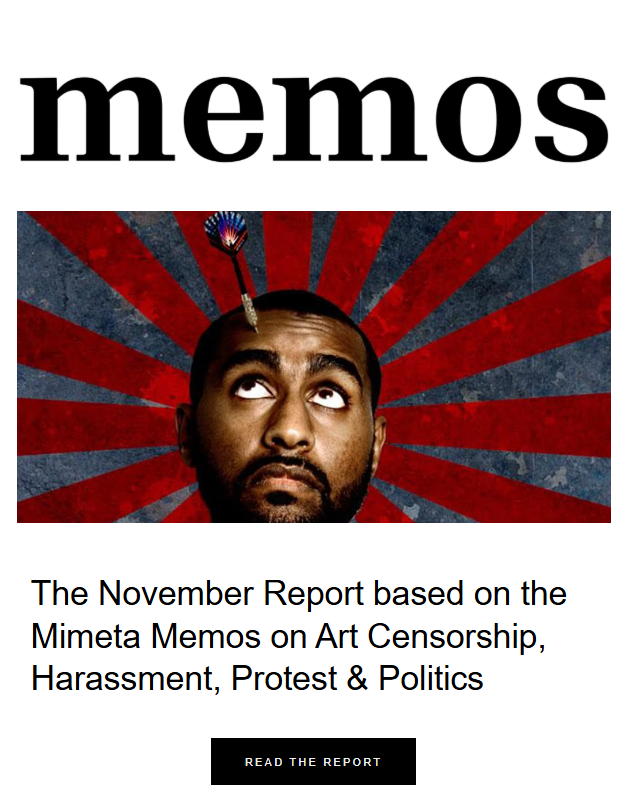
By Khalid Albaih
Sudanese artist and political cartoonist Khalid Albaih, known as “Khartoon,” merges art and activism to challenge injustice and amplify silenced voices. From his 2025 exhibition Refresh at Kunstnernes Hus to digital platforms like KhartoonMag.com, Albaih turns creative expression into resistance. His installations Shahid and Bahar confront global indifference to conflict and displacement, redefining what it means to witness through art in a connected yet divided world.
Teddy Yo, born Tewodros Assefa, has become one of Ethiopia’s most influential hip hop artists. Known for blending local rhythms with global urban styles, his politically charged song “Wenbersh” led to a brief 2022 arrest, highlighting challenges for artists in Ethiopia. His 2024 album Yileyal demonstrates resilience and ongoing cultural influence, making him a voice for youth and the diaspora navigating social and political complexities.
A new UN report (A/80/278) warns that digitalization and AI can both amplify censorship and empower free expression. Civsy—created by Mimeta—directly answers this challenge. By training local researchers and deploying an AI-powered platform, Civsy systematically documents violations of artistic freedom, especially in underserved regions. This evidence fuels advocacy, policy reform, and accountability, turning data into a powerful tool for protecting cultural rights worldwide
From October 5–11, 2025, Banned Books Week unites readers, libraries, and advocates worldwide to defend the freedom to read. Led by honorary chairs George Takei and youth advocate Iris Mogul, this international campaign highlights the urgency of protecting intellectual freedom and creative expression from censorship. Join by reading challenged books, attending events, and amplifying authors’ voices.
More than 150 cultural institutions across the United States have issued a joint appeal against mounting political interference and censorship, warning that artistic and intellectual freedom are at risk. Led by the National Coalition Against Censorship and the Vera List Center, the statement calls for solidarity and courage as funding cuts and government intervention threaten the independence of museums, theatres, and cultural organizations nationwide.
One year after surviving attempts at censorship, Alipato at Muog has emerged victorious, winning Best Picture and Best Director at the 73rd FAMAS Awards. The documentary chronicles the Burgos family’s decades-long search for Jonas Burgos, a disappeared activist, and stands as both a landmark of Philippine independent cinema and a defiant reminder that truth-telling and artistic freedom cannot be silenced.
In August 2025, the Bangkok Arts and Cultural Centre faced unprecedented pressure from Chinese officials to censor artworks critical of Beijing’s policies toward Uyghurs, Tibetans, and Hong Kong. The exhibition, exploring global authoritarian cooperation, was forced to remove or obscure names, flags, and political references—ironically becoming an example of the very repression it sought to expose.
Bi-2, a Russian-Belarusian anti-war rock band, was detained in Thailand in January 2024 for alleged visa violations after concert organizers claimed proper permits were secured. Accusations of Russian consular interference led to global advocacy from Amnesty and Human Rights Watch, resulting in the band’s release to Israel. Their case exposes new realities of transnational repression facing artists.
The Museum of Forbidden Art in Barcelona faced an unprecedented convergence of crises in 2025. A months-long labor dispute crippled daily operations, while a separate censorship clash in Andorra forced the cancellation of the museum’s first international exhibition. Financial collapse and operational turmoil ultimately led to the museum’s closure on June 27, highlighting the fragile balance between labor rights and artistic freedom.
Last week, MUSE/IQUE's The UnAmericans brought the Hollywood Blacklist era to life through a powerful multimedia performance at The Huntington. Blending music, narrative, and history, the show explored the silencing of artists during the Red Scare and underscored the ongoing fight for creative freedom. With performances honoring blacklisted legends like Lena Horne and Harry Belafonte, it reminded audiences of the high cost of censorship and the value of artistic expression.
Inside Mumbai’s Liberty Cinema, Grover’s KISS turns a single kiss into a symbol of India’s enduring battle over censorship and creative freedom. Set entirely in a preview theatre, the film sharply critiques the societal and institutional forces shaping Indian cinema. Drawing from colonial-era laws to modern controversies, KISS uses satire to expose the absurdities of what’s considered “acceptable” on screen—revealing the constant push and pull between tradition and expression.