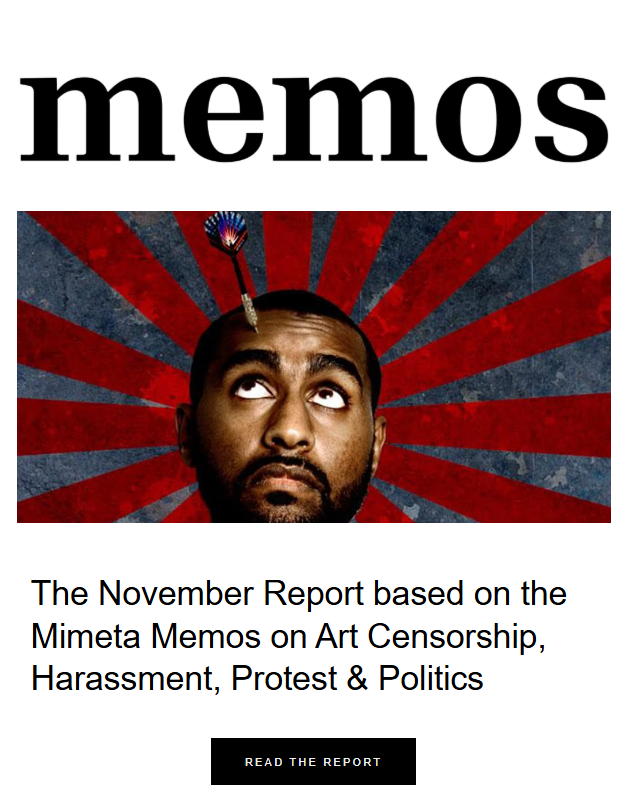
As President Daniel Noboa attends the Nobel Peace Prize ceremony in Oslo, Ecuador’s cultural sector faces mounting pressure at home. From the cancellation of a political caricature exhibition in Quito to direct threats against an installation at the Bienal de Cuenca, artists are confronting censorship, intimidation and growing self-censorship. These cases unfold amid protest repression, media shutdowns and shrinking civic space.
Palestinian documentary filmmaker Abdallah Motan has been held in Israeli administrative detention since January 2025 without charges or trial. Known for his internationally recognized work, including Deferred Reclaim, Motan’s detention highlights the suppression of Palestinian cultural voices. Despite international calls for his release and solidarity screenings of his films, his status remains unconfirmed, raising urgent questions about freedom of expression and the rights of artists under occupation
In Western Sahara, art is not decoration but defiance. From refugee camps where film festivals replace embassies, to occupied cities where poems and cameras lead to prison, Sahrawi culture has become a frontline of resistance. Through music, poetry, cinema, and the bodies of activists themselves, a stateless people wages a powerful struggle for visibility, memory, and self-determination. Against walls, prisons, and exile, culture becomes both shield and weapon in a war fought with words, images, and sound.
As war escalated in Gaza after October 2023, Meta’s platforms became crucial spaces for documentation and solidarity. Yet investigations and leaks suggest a vast system of digital censorship targeting Palestinian and pro-Palestinian content, allegedly in close coordination with Israeli authorities. While platforms deny political bias, artists and activists across the Arab world are now developing creative strategies to evade algorithmic suppression and preserve their narratives.
In November 2025, the Fall of Freedom movement mobilized artists across more than 600 U.S. cities in one of the largest coordinated acts of creative resistance in modern history. Through performances, installations, readings, and public gatherings, artists confronted rising authoritarianism and threats to free expression. The movement highlighted art’s vital role in defending democratic values and resisting government interference in cultural institutions.
Indonesia in 2025 has witnessed a convergence of economic anxiety, anger over political privilege, and public outrage at police conduct. What began as protest against parliamentary allowances escalated into a nationwide wave of demonstrations — catalyzed by the death of a young ride-share driver struck by a police armoured vehicle. Alongside these developments, youth-driven visual and musical protest culture has flourished, even as authorities respond with censorship, confiscations, and pressure on cultural workers.
Traditional musician Abbas Peymani was arrested by Iran’s IRGC Intelligence in Shahriar after criticizing political and economic conditions on social media. Taken to an undisclosed location with no public charges, his fate remains unknown, raising fears of enforced disappearance. Rights monitors say the case reflects a wider crackdown on artists, where peaceful expression is treated as a security threat and cultural voices are silenced.
Iraqi singer Hussein Al-Turki says he was tricked into joining the Russian army after traveling to Moscow for what he believed was a performance contract. Regional outlets report he was moved far from the city, had his phone confiscated, and was pressured to sign documents he couldn’t read. While his account remains unverified, it reflects a broader pattern of foreign nationals being misled into military service.
Peru’s APCI law, strengthened by the September 2025 sanctions regulation, is raising alarms in the arts and culture sector. Artists, filmmakers, and cultural organizations warn of potential fines, project cancellations, and indirect censorship due to vague rules and prior-approval requirements. While no cultural institutions have yet been penalized, the law’s chilling effect is reshaping creative freedom, international collaborations, and civil society engagement in Peru.
In August 2025, Korean-born violinist John Shin was detained by ICE while on a work assignment in Colorado, despite decades of life and artistic work in Utah. His case sparked an unprecedented mobilization from Utah’s music community, exposing how aggressive immigration enforcement can abruptly disrupt the lives and livelihoods of non-citizen artists
Moroccan rapper Hamza Raid became a central figure in the Gen Z protests that swept Morocco in September 2025, demanding education and healthcare reforms. Raid was detained and charged with unauthorized assembly and incitement to protest, drawing wide attention from youth and rights groups. His case highlights the risks artist-activists face and Morocco's tense climate for artistic freedom while authorities pledge order and due process.
On October 27, 2025, Myanmar authorities detained a director, actor, and comedian under draconian new laws criminalizing criticism of the election slated for December. Their names remain unreleased by responsible media, highlighting wider dangers for artists. The move reflects an intensifying crackdown on creative expression and dissent as the regime gears up for a widely contested vote.
The arrest of journalist Mzia Amaglobeli has crystallised Georgia’s struggle over independent expression. Detained on 12 January 2025 during protests in Batumi after she slapped the local police chief, Amaglobeli was later convicted and sentenced to two years in prison — a move rights groups say fits a broader assault on media freedom. As she received the 2025 Sakharov Prize for Freedom of Thought, thousands of protesters took to the streets demanding her release, underscoring how cultural and journalistic voices have become frontline defenders in Georgia’s democratic crisis.
As Uganda prepares for the 2026 presidential election, opposition leader Bobi Wine faces off once again against long-serving President Yoweri Museveni in a battle that could redefine the nation’s future. With a campaign rooted in youth empowerment, democracy, and justice, Bobi Wine’s movement fuses music, activism, and political defiance—pitting generational change against entrenched power in one of Africa’s longest-running regimes.
Morocco’s Gen Z protests, ignited on September 27, 2025, have become the country’s largest youth-led uprising since the Arab Spring. Sparked by deaths linked to hospital failures, thousands have taken to the streets demanding healthcare, education, and job reforms. Facing violent crackdowns and arrests, young Moroccans are joined by artists and activists, turning creativity into resistance and calling for a new social contract.
In September and October 2025, Madagascar’s youth ignited a historic uprising blending art, activism, and digital mobilization. Known as the Gen Z Madagascar movement, it united online creativity with civic resistance against corruption, inequality, and state repression. Through memes, music, and visual art, young protesters turned cultural expression into a force for democratic transformation.
More than 150 cultural institutions across the United States have issued a joint appeal against mounting political interference and censorship, warning that artistic and intellectual freedom are at risk. Led by the National Coalition Against Censorship and the Vera List Center, the statement calls for solidarity and courage as funding cuts and government intervention threaten the independence of museums, theatres, and cultural organizations nationwide.
Bi-2, a Russian-Belarusian anti-war rock band, was detained in Thailand in January 2024 for alleged visa violations after concert organizers claimed proper permits were secured. Accusations of Russian consular interference led to global advocacy from Amnesty and Human Rights Watch, resulting in the band’s release to Israel. Their case exposes new realities of transnational repression facing artists.
On June 25, 2025, Kenyan streets became vibrant arenas of protest and creativity as artists and arts organisations took center stage in the Gen Z-led movement. From digital art and graffiti to music and animation, creatives transformed public dissent into a cultural revolution. Amidst censorship and police brutality, their work gave voice to the voiceless, preserved memory, and pushed boundaries. This fusion of resistance and art marked a powerful shift in Kenya's civic landscape.
Last week, MUSE/IQUE's The UnAmericans brought the Hollywood Blacklist era to life through a powerful multimedia performance at The Huntington. Blending music, narrative, and history, the show explored the silencing of artists during the Red Scare and underscored the ongoing fight for creative freedom. With performances honoring blacklisted legends like Lena Horne and Harry Belafonte, it reminded audiences of the high cost of censorship and the value of artistic expression.