Palestinian documentary filmmaker Abdallah Motan has been held in Israeli administrative detention since January 2025 without charges or trial. Known for his internationally recognized work, including Deferred Reclaim, Motan’s detention highlights the suppression of Palestinian cultural voices. Despite international calls for his release and solidarity screenings of his films, his status remains unconfirmed, raising urgent questions about freedom of expression and the rights of artists under occupation
The Trump administration’s December 2025 policy actions—targeting content moderation workers through visa restrictions, attacking European digital regulation, and endorsing nationalist movements abroad, reveal a coordinated strategy reframing “free speech” as a political weapon. These measures undermine platform accountability, restrict international cooperation, and threaten the democratic infrastructure that protects artistic expression and research worldwide.
From blasphemy accusations in Bangladesh to algorithmic suppression of Palestinian content, from the criminalization of artistic intention in Turkey to the chilling effect of vague laws in Peru—artistic freedom is no longer a niche issue. It's a barometer for democracy itself. The report shows that when governments arrest musicians for anti-war songs, prosecute filmmakers for planning documentaries, or shut down galleries and festivals, society loses not only cultural expression but also the capacity to challenge power, imagine alternatives, and hold authority accountable.
Renowned Iranian filmmaker Jafar Panahi, 65, has been sentenced in absentia by Tehran’s Revolutionary Court to one year in prison, a two‑year travel ban and a ban on political and social group membership for alleged “propaganda activities against the system.” The ruling comes as his Cannes‑winning film “It Was Just an Accident” garners major international awards and renews focus on Iran’s assault on artistic freedom.
Moroccan rapper Pause Flow is facing criminal prosecution in Sefrou over lyrics from nearly ten songs accused of insulting public officials and an organized body. After arrest and pre-trial detention, his potential release now depends on a high bail. The case has triggered national debate on artistic freedom, with fellow rappers and rights groups warning of rising pressure on critical voices in Morocco’s music scene.
Posted
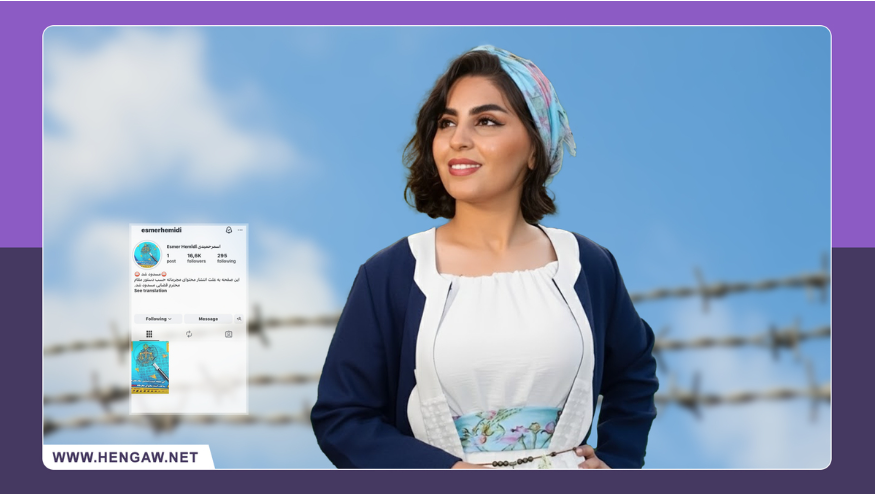
Screenshot from Hengaw.net
Iranian security forces arrested young Kurdish singer and cultural activist Asmar Hamidi during a raid on her family home in North Khorasan, transferring her to an undisclosed location without charges. Authorities later blocked her social media accounts, erasing her artistic platform. Her case reflects escalating pressure on women artists, Kurdish identity, and all who use culture for peaceful expression. Following the “Woman, Life, Freedom” protests, musicians face intimidation and prosecution under vague security charges.
In August 2025, performances of the Malas brothers’ play All Naked, and You’re Doing Fine were abruptly halted in Tartus following their public criticism of ongoing abuses. While local reports described cancelled shows and suspended workshops, the Ministry of Culture denied issuing any ban, calling it a “misunderstanding.” Performances later resumed.
Posted
CommentPost a comment
The arrest of veteran Algerian journalist Saad Bouakba has reignited debate over shrinking space for free expression in Algeria. Detained after remarks on alleged historical financial misconduct linked to the FLN, Bouakba now faces charges of defamation and insulting state symbols. His case highlights the growing criminalization of dissent, the fragility of historical debate, and the mounting risks faced by journalists, artists, and commentators who challenge official narratives.
The arrest of Baul singer Maharaj Abul Sarkar has intensified a national debate over religion, law, and artistic freedom in Bangladesh. Accused of hurting religious sentiment during a stage performance, Sarkar was detained and jailed, prompting protests, counter-rallies, and violent clashes. Artists and civil society leaders warn the case reflects a wider pattern of pressure on folk and syncretic traditions, with blasphemy-style accusations increasingly used to suppress cultural expression.
As war escalated in Gaza after October 2023, Meta’s platforms became crucial spaces for documentation and solidarity. Yet investigations and leaks suggest a vast system of digital censorship targeting Palestinian and pro-Palestinian content, allegedly in close coordination with Israeli authorities. While platforms deny political bias, artists and activists across the Arab world are now developing creative strategies to evade algorithmic suppression and preserve their narratives.
Traditional musician Abbas Peymani was arrested by Iran’s IRGC Intelligence in Shahriar after criticizing political and economic conditions on social media. Taken to an undisclosed location with no public charges, his fate remains unknown, raising fears of enforced disappearance. Rights monitors say the case reflects a wider crackdown on artists, where peaceful expression is treated as a security threat and cultural voices are silenced.
Malaysian pop group Dolla faces national debate after their music video “Question” was removed by Universal Music Malaysia due to conservative backlash. Religious authorities criticized the outfits, raising questions on artistic freedom, self-censorship, and syariah law enforcement. Civil rights groups defend the artists, while fans call for creative autonomy. The controversy highlights tensions between modern pop culture and Malaysia’s cultural norms.
Peru’s APCI law, strengthened by the September 2025 sanctions regulation, is raising alarms in the arts and culture sector. Artists, filmmakers, and cultural organizations warn of potential fines, project cancellations, and indirect censorship due to vague rules and prior-approval requirements. While no cultural institutions have yet been penalized, the law’s chilling effect is reshaping creative freedom, international collaborations, and civil society engagement in Peru.
In 2025, Libya’s creative community faces unprecedented restrictions as authorities in the East and West impose strict controls over music, theater, and visual arts. Rap concerts are canceled, festivals shut down, and galleries closed, while bloggers and artists face surveillance, threats, and arbitrary detention. Human rights groups warn that these measures are driving self-censorship, exile, and the suppression of Libya’s vibrant cultural expression, raising urgent concerns about freedom of expression.
Posted
A young singer in Tangier faced legal consequences after his Eid al-Fitr performance went viral, drawing criticism for content viewed as inappropriate for minors. The Tangier Court of First Instance imposed a suspended prison sentence and a fine. The case demonstrates how social media and local public-morals laws intersect with neighborhood celebrations in Morocco.
Turkish film producer Çiğdem Mater remains in prison, convicted for the “intention” to create a documentary on the 2013 Gezi Park protests—a film never made. Her sentence highlights the rise of artistic repression in Turkey, turning creative planning into a crime. Ongoing global advocacy efforts push for her release as her case becomes a global symbol in the fight for artistic and civic freedoms
In 2025, Tunisian artists, cultural organizations, and independent media face mounting pressure from administrative suspensions, audits, and legal scrutiny. Dream City 2025 continued its program, but the broader arts ecosystem experiences self-censorship, interrupted projects, and heightened risk. Independent media collective Nawaat illustrates the intersection of artistic, journalistic, and civic freedoms under threat in Tunisia today.
Posted
Yekaterina Barabash, a renowned Russian film critic and journalist, became a symbol of defiance after opposing Russia’s “war-fakes” law. Arrested in 2025 for anti-war commentary, she was placed under house arrest before escaping Moscow with help from Reporters Without Borders. Now in France, Barabash continues to speak out for artistic freedom and against censorship in Putin’s Russia.
Built on Vespa Cloud, the Civsy-project of Mimeta unifies scattered reports of artistic censorship into a centralized, trustworthy, and searchable platform. By integrating advanced indexing and AI-driven relevance, Civsy empowers researchers, journalists, and advocates to explore global censorship patterns, ensuring transparency and accessibility in the defense of artistic freedom.
Russian street musician Diana Loginova, 18, and her band Stoptime, were arrested in St. Petersburg in October 2025 after performing anti-Kremlin songs by banned artists. Their public protest sparked viral online support and waves of solidarity, highlighting the risks artists face for dissent under Russia’s expanding censorship laws. The case underscores the importance of artistic freedom and youth resistance to governmental repression.