In January 2026, Iran imposed a nationwide internet shutdown that left tens of millions with severely restricted access for close to three weeks, amid protests and a security crackdown. Weeks earlier, Uganda again cut access around elections, throttling platforms and blocking social media. At the same time, new leaks and investigations trace how commercial filtering and surveillance tools from Western and Chinese firms make these shutdowns sharper and harder to evade.
Iranian security forces killed at least 21 artists and cultural workers during a month-long crackdown on nationwide protests that began January 8, 2026. The deaths occurred across multiple cities as government forces opened fire on demonstrators, turning what Amnesty International called "the deadliest period of repression by the Iranian authorities in decades" into a systematic killing of photographers, musicians, actors, and filmmakers alongside thousands of other civilians.
During the 2022 Woman, Life, Freedom protests, Iranian artists became cultural icons—over 100 arrested or prosecuted for their activism. Today, with leaked government documents exposing a secret "Celebrity Task Force" and systematic work bans, prominent creatives have gone underground. The December 2025–January 2026 uprising shows artists participating through encrypted channels and anonymous work rather than public visibility. Yet the cultural infrastructure they built—from the Grammy-winning anthem "Baraye" to protest imagery—remains the emotional backbone of resistance, while the fates of 2022's imprisoned and exiled figures continue to shape how the movement unfolds.
Kurdish violinist Nima Mandoumi, 23, was seized by Iranian intelligence in Alborz province on 9 December 2025 and has since disappeared into incommunicado detention. His arrest reportedly followed an international concert in Armenia involving Israeli musicians, underscoring how Iran’s security apparatus is criminalising cross‑border artistic collaboration and using enforced disappearance to silence Kurdish cultural voices
Iranian Nobel laureate Narges Mohammadi remains in detention after a violent arrest at a memorial ceremony in Mashhad, where security forces beat mourners and detained dozens. Mohammadi has been hospitalized twice for serious head and neck injuries caused by baton blows and has since been returned to custody despite serious pre-existing health conditions. Authorities have opened a new security case against her, including an accusation of “cooperation with Israel,” raising urgent concerns about her health, safety, and access to medical care.
Iranian singer, Parastoo Ahmadi, 27, stages a bold hijab‑free “imaginary concert” in a historic caravanserai, livestreamed on YouTube with no physical audience but watched by thousands online. Performing in a sleeveless dress with uncovered hair alongside three male musicians, she directly challenges Iran’s bans on women singing publicly. Within 24 hours, the judiciary announces legal proceedings, turning one virtual show into a high‑stakes test of artistic freedom.
Renowned Iranian filmmaker Jafar Panahi, 65, has been sentenced in absentia by Tehran’s Revolutionary Court to one year in prison, a two‑year travel ban and a ban on political and social group membership for alleged “propaganda activities against the system.” The ruling comes as his Cannes‑winning film “It Was Just an Accident” garners major international awards and renews focus on Iran’s assault on artistic freedom.
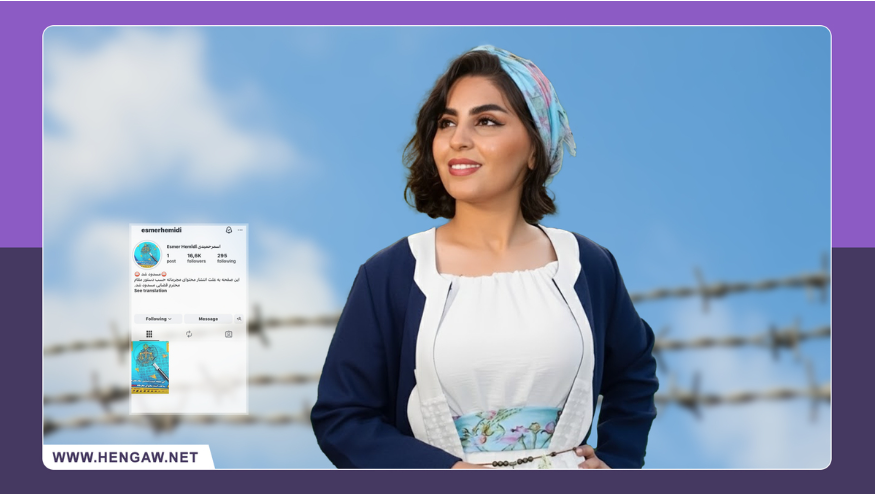
Screenshot from Hengaw.net
Iranian security forces arrested young Kurdish singer and cultural activist Asmar Hamidi during a raid on her family home in North Khorasan, transferring her to an undisclosed location without charges. Authorities later blocked her social media accounts, erasing her artistic platform. Her case reflects escalating pressure on women artists, Kurdish identity, and all who use culture for peaceful expression. Following the “Woman, Life, Freedom” protests, musicians face intimidation and prosecution under vague security charges.
Traditional musician Abbas Peymani was arrested by Iran’s IRGC Intelligence in Shahriar after criticizing political and economic conditions on social media. Taken to an undisclosed location with no public charges, his fate remains unknown, raising fears of enforced disappearance. Rights monitors say the case reflects a wider crackdown on artists, where peaceful expression is treated as a security threat and cultural voices are silenced.
Since October 2025, Iranian authorities have arrested at least five rappers and a composer, targeting minority artists from Ahwazi Arab and Kurdish communities. Forced confessions and public apologies, circulated online and via state-linked channels, expose a systematic campaign of intimidation. Human rights groups report beatings, denial of legal counsel, and coercion, highlighting a broader pattern of repression against artists and activists across Iran.
Iranian filmmakers face significant challenges due to strict censorship, which limits creative freedom and forces many to produce films in secret or leave the country. Nina Zarabi's story highlights these challenges
Iranian singer Amir Tataloo's death sentence sparks global outcry over blasphemy and freedom of expression