The quiet cancellation of Jumana Manna’s solo exhibition at Heidelberger Kunstverein in 2023 has ignited debates on artistic freedom, Palestine, and the use of antisemitism frameworks in cultural institutions. Critics argue that IHRA definitions risk conflating political critique of Israel with antisemitism, limiting Palestinian voices. Manna’s case highlights self‑policing, institutional caution, and calls for alternative standards like the Jerusalem Declaration on Antisemitism.
The Egyptian Musicians’ Syndicate’s investigation of singer Reda El Bahrawi after his July 2025 North Coast concert highlights the body’s growing influence over live performance in Egypt. With only vague references to unspecified “violations,” the case raises ongoing concerns about transparency, due process, and the impact of discretionary cultural regulation on artistic freedom.
Posted
Mohamed Ramadan faces a two-year prison sentence for releasing his hit “Number One, you halves” without Egypt’s required censorship permits, extending state control into music published on global platforms like YouTube. The conviction, though not yet enforced, sends a chilling signal to high-profile artists as authorities tighten oversight of digital creativity and blur the line between stardom and criminalisation.
Iranian singer, Parastoo Ahmadi, 27, stages a bold hijab‑free “imaginary concert” in a historic caravanserai, livestreamed on YouTube with no physical audience but watched by thousands online. Performing in a sleeveless dress with uncovered hair alongside three male musicians, she directly challenges Iran’s bans on women singing publicly. Within 24 hours, the judiciary announces legal proceedings, turning one virtual show into a high‑stakes test of artistic freedom.
Poet and opposition leader Chaima Issa has become a central symbol of Tunisia’s shrinking civic space. Arrested on 29 November while joining a women’s rights protest in Tunis, she is now serving a 20‑year sentence in the politically driven “Conspiracy Case” and has launched a hunger strike from Manouba Prison, turning her body into a final form of protest against President Kais Saied’s escalating repression.
Posted
A new report has brought grim clarity to Sudan’s ongoing war, confirming that more than fifty-five artists have been killed since fighting erupted in 2023. The African Centre for Justice and Peace Studies (ACJPS) released the findings in its November 26 publication, "Tears of Guitars", marking the first verified account of cultural casualties in the conflict. It paints a devastating portrait of how Sudan’s artistic community, once a cornerstone of civic identity and resilience, has become a deliberate target in a war shaped by fragmentation, impunity, and the battle for national memory.
As Uganda heads toward the 2026 elections, opposition‑aligned musicians are being drawn into an intensifying crackdown marked by arbitrary arrests, house‑arrest‑style sieges and shootings at rallies. From repeated cordons around Bobi Wine’s home to the arrest of Nubian Li and the shooting of Omukunja Atasera, the state is treating music as a security threat rather than a space for artistic expression
Posted
(public domain picture of Alfred Nobel) María Corina Machado is celebrated as a Nobel Peace Prize laureate and symbol of resistance to Nicolás Maduro’s authoritarian rule. Yet her closest international alliances lie not with centrist democrats, but with a hard transnational right stretching from Washington to Madrid, Rome and Jerusalem. Mimeta examines how this shapes the meaning of “freedom” in and beyond Venezuela.
As President Daniel Noboa attends the Nobel Peace Prize ceremony in Oslo, Ecuador’s cultural sector faces mounting pressure at home. From the cancellation of a political caricature exhibition in Quito to direct threats against an installation at the Bienal de Cuenca, artists are confronting censorship, intimidation and growing self-censorship. These cases unfold amid protest repression, media shutdowns and shrinking civic space.
As President Santiago Peña appears as guest at the Nobel Prize Awards, a darker reality unfolds at home. Paraguay’s independent arts sector is facing mounting pressure through vandalism, court rulings and moral panic. From the violent destruction of Ruth Flores’s artwork to the criminal sentencing of a cultural centre director, artists and managers are paying the price for defending dissent, diversity and free expression.
Chinese actor Yu Menglong, 37, died in Beijing on September 11, 2025. Officially ruled an accidental fall, his death has made speculation online, fuelling debates across China and Taiwan. Suppressed domestic discussion collided with diaspora discourse, highlighting tensions between PRC narrative control and cross-border media scrutiny. The case reveals the limits of digital censorship, the power of global fandom, and the complexities of information in a politically charged environment
Palestinian documentary filmmaker Abdallah Motan has been held in Israeli administrative detention since January 2025 without charges or trial. Known for his internationally recognized work, including Deferred Reclaim, Motan’s detention highlights the suppression of Palestinian cultural voices. Despite international calls for his release and solidarity screenings of his films, his status remains unconfirmed, raising urgent questions about freedom of expression and the rights of artists under occupation
The Trump administration’s December 2025 policy actions—targeting content moderation workers through visa restrictions, attacking European digital regulation, and endorsing nationalist movements abroad, reveal a coordinated strategy reframing “free speech” as a political weapon. These measures undermine platform accountability, restrict international cooperation, and threaten the democratic infrastructure that protects artistic expression and research worldwide.
45 of the censorship cases published on Mimeta Memos have been analyzed by an AI-powered platform used for monitoring violations of artistic freedom. Instead of only summarizing text, it looks at meaning and context, using word sense disambiguation to understand sensitive, political, and legal terms correctly in multiple languages. It also performs relationship extraction, identifying who did what, where, and when in each case, so that actors, events, places, and timelines can be connected across all 45 incidents.
In Western Sahara, art is not decoration but defiance. From refugee camps where film festivals replace embassies, to occupied cities where poems and cameras lead to prison, Sahrawi culture has become a frontline of resistance. Through music, poetry, cinema, and the bodies of activists themselves, a stateless people wages a powerful struggle for visibility, memory, and self-determination. Against walls, prisons, and exile, culture becomes both shield and weapon in a war fought with words, images, and sound.
From blasphemy accusations in Bangladesh to algorithmic suppression of Palestinian content, from the criminalization of artistic intention in Turkey to the chilling effect of vague laws in Peru—artistic freedom is no longer a niche issue. It's a barometer for democracy itself. The report shows that when governments arrest musicians for anti-war songs, prosecute filmmakers for planning documentaries, or shut down galleries and festivals, society loses not only cultural expression but also the capacity to challenge power, imagine alternatives, and hold authority accountable.
Renowned Iranian filmmaker Jafar Panahi, 65, has been sentenced in absentia by Tehran’s Revolutionary Court to one year in prison, a two‑year travel ban and a ban on political and social group membership for alleged “propaganda activities against the system.” The ruling comes as his Cannes‑winning film “It Was Just an Accident” garners major international awards and renews focus on Iran’s assault on artistic freedom.
Moroccan rapper Pause Flow is facing criminal prosecution in Sefrou over lyrics from nearly ten songs accused of insulting public officials and an organized body. After arrest and pre-trial detention, his potential release now depends on a high bail. The case has triggered national debate on artistic freedom, with fellow rappers and rights groups warning of rising pressure on critical voices in Morocco’s music scene.
Posted
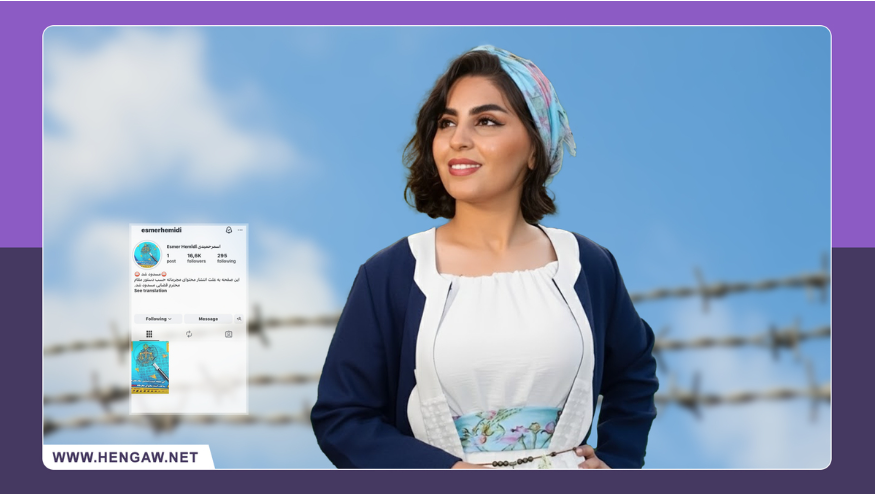
Screenshot from Hengaw.net
Iranian security forces arrested young Kurdish singer and cultural activist Asmar Hamidi during a raid on her family home in North Khorasan, transferring her to an undisclosed location without charges. Authorities later blocked her social media accounts, erasing her artistic platform. Her case reflects escalating pressure on women artists, Kurdish identity, and all who use culture for peaceful expression. Following the “Woman, Life, Freedom” protests, musicians face intimidation and prosecution under vague security charges.
In August 2025, performances of the Malas brothers’ play All Naked, and You’re Doing Fine were abruptly halted in Tartus following their public criticism of ongoing abuses. While local reports described cancelled shows and suspended workshops, the Ministry of Culture denied issuing any ban, calling it a “misunderstanding.” Performances later resumed.